Some thoughts on indie authors, and a review

I think every now and then these days about what it means to be an indie author.

For me, it’s meant being able to publish a literary novel that I thought was never going to make it into the light of day. It’s meant being able to begin publishing stories from my “backlist” on Kindle and being able to make money from them because they happen to be in a genre that’s in demand. (Hint: erotica.)

And it’s meant interacting with other indie authors, most of whom I’ve met or encountered on Smashwords or Twitter. What this means is that I get to feel part of a loose, far-flung, but real “scene.” There seems to be more generosity and cameraderie in this scene than there ever would have been in the old days, when agents and mainstream publishers had everyone placed into little hierarchical boxes.

While the new “scene” isn’t perfect, I do see the benefit of being part of this group of people, some of whom I’ve come to admire and like. I’ll mention a few names here of writers that I’ve come to know over the last few months. Jacqueline Applebee is the first novelist whose work I downloaded from Smashwords. She’s a bi, poly British woman of color who writes predominantly erotica but has published a sort of poly coming-of-age novel set in London called An Expanded Love. I really liked it.

I like my friend Kate Genet‘s work too. She’s a New Zealand novelist and book reviewer for a lesbian online magazine called Kissed By Venus. She’s actively writing and publishing women-centered paranormal and suspense titles on Smashwords and Kindle and has a great blog called The Misbehaving Mind. I know I would never have stumbled across her work if it hadn’t been for my own adventures in online publishing. Kate has a very enthusiastic fan base but has been incredibly generous with the attention she’s given to me, and I’m sure to other authors as well.

Although I haven’t read her book yet, I was intrigued by the premise of Donna Glaser‘s novel on Kindle–she’s a Wisconsin-based psychotherapist who writes mysteries about a therapist sleuth, which I think is pretty cool! You can find her on Twitter at @readdonnaglaser.

None of these people are making tons of money, as far as I know, but they’re all quite serious about their literary careers. They’re working hard at day jobs, or raising kids, or recovering from illnesses. Once the old trope of being a literary “star” is taken away, I find writers can be kind, helpful, and eager for connection. I’m happy to be around in this time, because I find it’s far more fruitful to be self-publishing and promoting than for waiting for Mr. or Ms. hot shot agent to call and make my career happen… I can’t help feeling that this new time for writers–and readers too, as chaotic as it may be, holds much promise.

An interesting blog for aspiring self-published writers to follow is Bob Mayer‘s blog, Write It Forward. He is insanely successful, but only because he started self-publishing his backlist of historical/military thrillers on Kindle and took it seriously as a business. He critiques the publishing industry, which he has plenty of experience with, in an unusually piercing and perceptive way. To boil down his insights into a few words, he thinks that top authors should stick with their Big Publisher contracts, but that everyone else is totally ignored by the mainstream publishers and should take matters into their own hands. He thinks that mainstream publishers are way behind the curve on ebooks, stingy with contract terms, and don’t have a clue what they’re doing, essentially. And their publicity efforts never benefit writers except for the ones who are absolutely huge best-sellers.

Much to think about.

I promised a review and here it is. I recently read Shannon Yarbrough’s”Are You Sitting Down? (Amazon Kindle edition, $1.99) and found it an amazingly good read. This is Yarbrough’s third novel, and it shows in the fluency of the writing and the depth of character. He’s someone who is as yet unacknowledged by gay writing organizations like Lambda Literary, which themselves seem to be hanging on by their fingernails. This is not a “gay novel” so much as a family novel, though. Here’s my review of the Kindle edition:

I am so glad that I read this novel. First off, my impression was that it would be a realistic Midwestern family drama. As I got further immersed in the book, I began to see that it is in fact a deeply Southern tale, concerned with secrets, sex and death. The book opens with a death, in fact; the father, Frank White, has a stroke while his wife Lorraine weeps at his side. Yarbrough does death scenes in an unusual and interesting way. They are strangely intimate, as we see the thoughts of the dying person as they fade out of the world. Their thoughts are for their loved one, but the implication is that they are being freed from something messy and sad. In fact, the family that Frank is leaving behind is not really a happy one. Each adult child has secrets which they haven’t shared with the others; each carries burdens and regrets and shame. The anchor of the book is the third child Travis, a gay man who has lost his lover Justin to cancer. Each person reflects on their life in short chapters, making this a many-angled novel of unusual depth.

Travis is an outsider to the family, living in Memphis while the others have stayed in the small town aptly named Ruby Dregs. (The foul rag and bone shop of the heart, anyone?) While he adores his mother, he realizes at the end of the book that he hasn’t been as close to her as he thought. The driving plot of the book is the leadup to the family Christmas, where all the Whites will be together. This Christmas, it’s well-behaved Travis’s turn to make a scene–a shocking outburst that had me laughing out loud, but also keenly aware, as a gay person, how painful it is to always be the person pushed aside and not central in a family. Another highlight of the book is Travis’s first visit to the Ruby Dregs cemetery to see Justin’s headstone, which he has picked out. In a powerful scene, an old black woman selling flowers seems to be channeling Justin’s spirit as she brings Travis messages from beyond the grave. “Are You Sitting Down?” deals with themes of forgiveness, reconciliation, and a journey to wholeness, but Yarbrough’s writing makes clear that death is always just around the corner and that despite the hope of family togetherness, each of us is stumbling through life alone dealing with our past and our secrets.

There’s another element to the story. Justin’s parents, the Blacks, are painted as truly toxic. In fact, as we see more of Justin’s father, who initially seems like a mild-mannered, obese old man, we get peeks into the mind of a sociopath. To deal with love, death AND evil… this novel takes on a lot, posing destabilizing questions about reality at every turn.

Here is a quote that seems to sum up the spirit of the novel. It comes as the Whites’ youngest daughter, Clare, is thinking about what she found when she looked through her father’s desk after he died. “Sometimes we yearn for the truth that we think is hidden from us. It’s only when we find the truth we’ve been looking for that we often wish we didn’t know after all, and then we see why it was kept from us in the first place.”
Posted in Personal, Reviews, Writing | Tagged , , , , , , , , , , , | 1 Comment

‘Outdated’ review

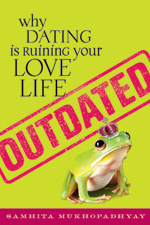
‘Outdated: Why Dating Is Ruining Your Love Life’ Samhita Mukhopadhyay, Seal Press, September 2011,  280 p, $17.00

Outdated feels like a new type of book–an anti-dating book, written by the executive editor of Feministing.com, a popular feminist blog for women in their 20s and 30s. And the author, Samhita Mukhopadhyay, is a young woman of Indian descent, who identifies as feminist, fat, and an “avid dater.”

I was predisposed in many ways to like this book, having never felt like I fit in to the dominant paradigm of heterosexual dating, nor did I really fit in to the queer dating crowd back in the 90s, when I was cluelessly doing the online dating thing and finding that despite my winning way with words, I was just horrible at meeting and connecting with people. And it was a very strange time for me, because I felt like I was intelligent and in some ways a good catch. Yet I never escaped the feeling that (a) I was not what anyone was looking for, and (b) I was a total fish out of water–I was out of my element and I would never do well here; I’d be rejected by both women and men. But why? I wondered, back then. Why don’t they see that I have a lot to offer?

The “why” question doesn’t come up for me anymore. Looking back on it, there was sort of a basic failure built in to what I was trying to do. There wasn’t a level playing field at all, and I was competing with a lot of other women who were slimmer, more confident, and simply more appealing than I was. I think it’s a blind spot of women in our 20s that we overestimate our appeal–or sometimes we underestimate it–but somehow we never end up with the people who like us a lot (they don’t appeal to us), while we foolishly pursue unavailable (and thus attractive) people.

Outdated has many good qualities and many interesting aspects, but it feels as though it’s written out of a bit of a blind spot. To begin with, Mukhopadhyay is setting out to overturn conventional wisdom–she feels mainstream dating books are anti-feminist and push the values that there is something deeply wrong with you if you’re single.

Here’s what she sees as the problem:

I realized that the question that no book addressed–which I now see as one of the biggest challenges of our generation–was how savvy, smart, successful, politically conscious women date and find love, on our own terms in a world that is still defined by traditional gender roles, impossible expectations, and archaic relationship models.

Mukhopadhyay sees our society as “heteronormative,” meaning there is no space for those who are not in a serious, monogamous (straight) relationship. As she says, with some understandable hyperbole, “As women, if we have not successfully found a serious, long-term, heterosexual relationship that is leading to marriage, we are left in a post-feminist disaster area where romantic dreams go to die, cat ladies are in abundance, and happiness is something we don’t deserve.”

I like Mukhopadhyay’s cheekiness, and I think her analysis of the judgement heaped on women who don’t conform to what society expects of them is right on. A large portion of this book is a very serious, sustained critique of the romance industry, which she calls the “romance industrial complex.” She is right that there is immense pressure on women to settle down, now more than ever, perhaps, and even more unfairly, now that the statistics are skewed against women–since for various complicated reasons more women are forced to stay single and have trouble finding mates once they hit their 30s.

Mukhopadyay comments on the societal pressure to find a man, and not to be alone:

“Keeping women focused on finding the right man is an underhanded way to keep us acquiescing to traditional values. Conflating our self-esteem with our relationship status is a very powerful and effective way to keep women feeling bad about themselves. I mean, if being alone means you are essentially a social pariah, an outcast, a feminist, and potentially ugly and unlovable, you are not going to be seeing young women lining up for the role.”

Here she faces the dilemma of what it means to be a successful woman in this society. Ultimately, someone who is too successful and too independent is not going to be seen as marriage material. The culture’s take on single women, according to Mukhopadhyay: “We are painted as sexy, sinful, successful, and pathetic–you name it, both good and bad–but ultimately we live outside the norm and are not ultimately considered a success.”

Throughout this book, I kept asking myself what a woman in her early 20s would think of it. Would it be mind-blowing? Eye-opening? I felt like the concepts Mukhopadhyay was presenting, her critique of all the sexist dating books out there, including a withering one of Lori Gottlieb’s Marry Him: The Case for Settling for Mr. Good Enough, were interesting… but I also felt a niggling sense that she was trying to justify her own dating life, which has included, as she admits candidly, a lot of casual sex. And strangely, the casual sex chapter was the most interesting to me, because when Mukhopadhyay is talking directly about her own experiences, there’s a level of truth to the narrative that’s powerful. I don’t find the other parts of the book disingenuous, but I find them rather sad. There’s a sadness peeking through the polemic.

Mukhopadhyay keeps saying that feminism has made sex better, has made dating better. I haven’t read enough of the self-help books that decry feminism as an obstacle to dating, but it seems that her own romantic life has not been particularly easy. I liked it when she talked about the way women of color are sexualized today. “Within this rather toxic climate,” she says, “being a woman of color who’s in touch with her sexuality is an act of resistance. Pushing past the negative media depictions and still finding a healthy, healing, erotic, and functional sexuality is no small feat.”

I agree. And I find the phrase “within this toxic climate” suddenly very meaningful in the context of this book. Because there is a toxic climate out there. And what I missed in this book–even though Mukhopadyay stresses finding community, solidarity with other women, other couples, as an antidote to this forced notion of being with someone, anyone, rather than being alone–are other women’s voices! What saves the book, oddly enough, is the last chapter, because Mukhopadhyay pulls in her peers to talk about how feminism has worked for them in their dating lives. How has it made your love life better? she asks them. And suddenly the book is very affirming, the message is positive–and we see the feminism we’ve loved all along, feminism’s most positive face, which is women’s ability (bolstered by feminism) to define what we want in our romantic relationships and ask for it. It is wonderful to hear these other voices, in some cases more self-assured and happy-sounding than the author, and it made me miss the feminist anthologies of yesteryear, when there seemed to be such strength in numbers. If Mukhhopadhyay had included some of these positive messages throughout the book, I think it would have strengthened it.

I like Mukhopadhyay’s emphasis on alternative sexuality, on the fact that casual sex and exploration is a good thing for young women (rather than “ruining” them), and would have wished, too, that she’d dwelt slightly more on erotic alternatives for women. (It’s clear she’s done some same-sex experimentation, but she doesn’t deal with this explicitly; she does write boldly but not with great enthusiasm about her dabbling in open relationships.)

“What leads to happier relationships is being empowered, honest, intentional, and clear about what you want,” Mukhopadhyay writes. It’s a very helpful message for women of all ages. I can’t help wondering if one can come to this without feminism–could feminism be only one road that gets you there? I don’t know the answer to that. I like the fact that feminism opens doors to women–makes women feel stronger–and at a vulnerable time of one’s life, such as the college years, I think it’s very important.

This is a brave book because society is at this point so anti-feminist and nonegalitarian. It’s such a ruthless world out there; many women are deeply competitive with each other, too. To hold true to her feminist ideals in a world such as ours, as the author does, takes strength and courage indeed.

Posted in Personal, Reviews | Tagged , , , , | 2 Comments

August Update

Well, August has been a busy month (chatting with other writers on Twitter especially), and I’m horrified to see that I haven’t blogged all month. This is very bad. 🙂

My next book for review is an intriguing read that makes me glad I’m no longer in my 20s or early 30s, Outdated: Why Dating Is Ruining Your Love Life, by Samhita Mukhopadhyay (Seal Press). In it, she refers to the “romantic industrial complex,” a phrase I would have once been much amused by. I feel rather outside all that now (outside the romance industrial complex gates, phew–kind of a relief!), but I remember being 30 and feeling a crushing, hideous sense of failure that I wasn’t in a long-term relationship. Then I got into one, and it was a case of “be careful what you wish for.” Anyway, that review is coming up in the next few days.

Talking about reviews, a perceptive and wise 5-star review of The Leaving appeared on Smashwords.com recently, penned by a mysterious reviewer called FarFromHome. I had the feeling that this person knew me, but I didn’t know who it was. I even asked around a few people (especially my far-flung friends), who all responded graciously that it wasn’t them. I was certain that I would never know who FarFromHome was, when someone on Facebook whom I enjoy playing Scrabble with, the sibling of a relative by marriage, ‘fessed up out of the blue and said I could remove it if I wanted to, perhaps surprised that I hadn’t posted it on Facebook! I assured her that I loved her analysis of my novel. Here it is in its entirety:

Review by: FarFromHome on Aug. 21, 2011 :
As I became involved in Cathy’s story, the book took on a compelling “can’t put it down” quality. It is rare to find a writer who can so exquisitely breathe life into a character. At times, the depth with which the reader was allowed to see Cathy felt almost sacred, knowing that as we shared her most private thoughts and feelings, we were surely being allowed a glimpse into the author’s life as well, into those places and thoughts that are never privy to those around us. 

The story itself felt rather grim, as we followed Cathy through her painful teen-age years, preparing for ‘The Leaving’, pursuing her studies in preparation for the exams that would determine the path she would take in life. Cathy is painfully introspective, her intelligence as much a curse as a blessing as it tends to further set her apart from her peers. She feels awkward and different from those around her, but her courage in firmly holding to her convictions rather than the living a life that would be a distasteful lie for her, makes us care for her in a protective way as we watch her struggle through relationships in which she often faces rejection or scorn. Even the intellectual intimacy and emotional closeness she shares with Steve is scarred. At times he is cruelly distant or mocking towards Cathy, his behavior a protective shell he has formed around himself as he explores his homosexuality in a time and social climate when that lifestyle was not an acceptable option.

Cathy at last completes ‘The Leaving’, and rather than pursue the higher education that she has qualified for, passes through a different sort of leaving, her curiosity and courageous convictions prompt her to leave the proscribed life in her hometown in Ireland for one unknown, traveling to London to follow Stevie. Cathy eventually outgrows her confident brother, leaving him, the last vestige of the familiar, to pursue life far beyond the confines Stevie has established in his own escape.

Posted in Personal, Reviews, Writing | Tagged , , , , , , , , | 2 Comments

‘Found’ Is a Poignant, Powerful Take on Adoption Issues

Let me say first off that I am not an adoptee, so I don’t come to Found with the emotional hair triggers and sensitivities that someone in that situation might.

But this new memoir by journalist Jennifer Lauck (Seal Press, 24.95) grabbed me right from the beginning. Born in 1963 to a scared 17-year-old Nevada teenager, baby Jennifer was taken away at birth and placed with a couple called Bud and Janet Lauck. In a weird twist of fate, she only spent the first 10 years of her life with them, as the refined Janet was already a terminally ill woman when the adoption was approved; Bud died suddenly of a heart attack a couple of years later at 39. Lauck has written elsewhere of her gruelling experiences in her first 10 years (in the memoir Blackbird, which I haven’t read, but was a best-seller). In Found, she views her life with Bud and Janet at some ironic distance in a series of short vignettes, yet the writing is no less powerful for that.

Lauck simply never thrived with Bud and Janet. She puts her heart on her sleeve very early in the book when she says, of her attempt to fit into their life: “I went so far as to build rough scaffolding that propped me up on the set of their lives where I tottered around as if I belonged… My life was like a series of tugs and pulls where I had to take huge, wide steps across my interior rooms, and still I did not find myself at home in their world.”

What’s powerful about this narrative is Lauck’s immense experience of loss at such a young age. Not simply an adoptee who has to try to fit in to an alien environment, she also has to cope with the shattering of her adopted world at a very young age. She glides over the disturbing aspects of being on her own for awhile, then farmed out to different relatives, molested, etc.

She tells of starting to write her first memoir after giving birth to her son, Spencer. “He deserved a mother who was fully awakened and not a hostage to her past,” Lauck says with her trademark punchiness and economy.

And yet, she finds in her 20s and 30s that despite being a successful TV journalist she is not whole; she is disconnected. Lauck makes the connection, which I have not seen so strongly underlined before, between the birth trauma that a baby goes through when she is separated from her mother (as all adoptees are) and the adult adoptee being unable to bond securely with another or regulate their emotions. (A baby separated from the mother apparently repeatedly goes into shock, cries bitterly, and loses consciousness again and again.)

At 20 Lauck finds herself near collapse when Bud and Janet’s son Bryan kills himself; she had not been close to Bryan, but his sudden death flattens her.

In looking back at her experiences up to age 20, Lauck muses: “Had my brain–with its unique wiring and built-in responses–been drawing me into situations that resulted in rape, abuse, neglect and cruelty?”

Lauck describes her earnest practice of Tibetan Buddhism in her 30s to fill her feelings of emptiness after her divorce, but the book really takes off for me when she manages to locate her mother, Catherine, who is initially wary, then friendly, but never quite manages to meet Lauck’s intense neediness for maternal love.

Lauck describes these scenes of intense daughter-mother yearning in such a poignant way. Without blaming Catherine, Lauck effectively conveys that her birth mother is a brittle woman who never fully grew up herself; they look similar, she feels an intense connection with her mother, but Catherine cannot fully be there for her in the way that Lauck wants.

She describes waiting on the curb at Reno airport, feeling desolate and agitated on her first visit to Catherine’s hometown. Catherine doesn’t really seem to want her there. When Catherine finally drives up, Lauck is “crying and lost. I’m a forty-four-year old baby. What could be worse?”

Lauck ends Found on a philosophical note–she has found that she is able to love other children, not just her own; the people who love her tell her she’s more grounded since meeting her birth mother; her own kids are a blessing. She has become something of an adoption expert, as well, speaking at conferences. In her End Note, she makes a plea for the conversation on adoption to become more thoughtful. “The high instances of mental health disturbance in adoptive children and grown adoptees are stunning, and yet, there is little to no recognition of why,” Lauck says.

After reading this brave, wise, beautifully written book, I feel passionately that it should be read by as many adoptees and mothers considering adoption as possible.

Gabriella West’s latest novel is The Leaving, now available on Smashwords and Kindle.

Posted in Reviews | Tagged , , , , , | Leave a comment

The Leaving Gets 5-Star Review

It makes an author very happy to be acknowledged, especially by a fellow writer whom they admire. A New Zealand author called Kate Genet wrote a fantastic review of my novel The Leaving at the Kindle Store on Friday. She called it “A brilliant and beautiful book” and added, in part:

Absorbing is the word that comes to mind to sum up this novel. It is written in first person and has a distinct narrative voice. It is not light fare – it is a deep and insightful look at the character’s coming of age, coming to terms, and coming to acceptance.

Genet’s own work can be found here. She’s a vivid writer whose characters are often strong, solitary women engaging intensely with the natural world around them.

I haven’t given up book reviewing myself, and my next review will be of Found: A Memoir, by Jennifer Lauck.

Posted in Reviews, Writing | Tagged , , , , , , | Leave a comment

‘The Leaving’ Now Available on Kindle…and Other Book News

The Kindle edition!

I’m very happy to announce that my novel The Leaving is now available in the Kindle Store! Priced at $2.99, it’s the story of an adolescent brother and sister in 1980s Dublin. While older sibling Stevie navigates his sexuality (and his life) confidently despite unrelenting hostility from their father, Cathy takes a long time to understand who she is, falling painfully in love with her best friend, Jeanette. Read the first chapter here.

I literally started writing the novel on a Mac Classic and I remember having to shuttle early chapters on floppy disk into San Francisco State to print out in the computer lab for novel workshop readers. It’s come a long way to end up as an ebook … and I can only hope that it will find readers on what looks like an immensely crammed virtual bookstore. (It’s also available as an ebook for U.K. readers on Amazon.co.uk.)

In other book news, The Leaving can be picked up on Smashwords for half-off till the end of July, as part of their summer site-wide promotion.

And a long short story of mine, “The Truth About Jack and Ray,” is currently free on the site! It’s the story of an older man looking back in 1990s San Francisco at his doomed same-sex affair with a self-centered young artist in the early 1950s. The story is an intense portrayal of a codependent relationship and the dizzying ups and downs that go along with that…

Finally, the good folks at LibraryThing let me to offer 50 copies of The Leaving as a member giveaway. If you’re signed up at the site, there’s still time to request a free copy of the book… ends today at 8pm!

Posted in Writing | Tagged , , , | Leave a comment

‘Undecided’ review

‘Undecided: How to Ditch the Endless Quest for Perfect and Find the Career—and Life —That’s Right for You’

Barbara Kelley and Shannon Kelley, Seal Press, 224 p, $16.95

Undecided is a breezy, stimulating read, a career book for young women that focuses on the particular problems in making critical life and job choices that affect those born between 1977 and 1994. (Although the book name-checks the Millennial Generation quite often, I was at first confused because last time I checked, that generation was called Gen Y. Oh well!)

The aspect of Undecided that most interests me is that it was written by a mother and daughter duo: Barbara Kelley, who’s a professor of journalism at Santa Clara University, and her daughter Shannon, who writes for the Santa Barbara Independent and is also a freelancer and corporate consultant. While Barbara is of the baby boomer generation, Shannon represents the youthful, upwardly aspiring audience that the book is aimed toward, giving the book a sort of dual nature–Undecided eloquently describes the hard, painful choices women still have to make in their work lives from the perspective of someone who has lived through the much tougher, sexist environment of the 1970s and yet the interviews with contemporary women are … well, representative of their generation in the sense that they came off as a little glib, shallow and hard for me to identify with. This doesn’t ruin the book because the Kelley’s overview, their analysis of where contemporary women are in their lives and how challenging they are finding it to make life choices, is so skillfully and perceptively done. In other words, the book offers a lucidly feminist analysis of a whole generation which views itself as having transcended feminism–which is interesting territory, indeed.

The word “feminism” comes up a lot in this book. In one of the chapters that I found most compelling, “The Road Not Traveled,” the Kelleys write about the peculiar pain this younger female generation feels. Explicitly told from birth that they can have it all, unlike any other generation of women, these women are caught up in brooding over missed opportunities, unable to enjoy the often very good jobs in front of them while they fantasize about an even better life, or a more perfect one. “With its focus on creating opportunities,” the Kelleys write, “feminism has brought us an expanse of open doors, but without a strategy to help us choose one. So we frequently find ourselves obsessing over what’s going on behind each and every one.”

The Kelleys are honest about the way that women tend to constantly worry about status and falling behind: “How often are the milestones (marriage, advanced degree, corner office, fat apartment in the city, fat home in the ‘burbs, fat baby in the stroller) we shoot for not–if we were to really think about it–personal goals we’ve set after honest, careful assessment of what we want for our lives, but just sort of assumed? Everyone else is doing it…”

The Kelleys see the constant dissatisfaction of this generation expressed as commitmentphobia. One interviewee says, “My biggest problem is that if I don’t like something, I walk.” What a strange attitude to have! If our grandmother’s generation had no options, and our mother’s generation had limited, lousy options, the generation that calls itself Gen X, of which I’m one, came of age and into the job market in the recession of the early ’90s, where you were lucky to get anything. We didn’t in the least feel entitled to have it all, and in fact the divorces and family dysfunctions with which we were raised in the ’70s pretty much ensured that we entered our twenties feeling a sense of scarcity, insecurity and narrowed options. The job world we moved into wasn’t great, and offered us lots of work for low pay. I remember being quite surprised when instead of any pressure or encouragement from my family, a middle-aged woman friend in my first long-term workplace urged my to finish up my master’s degree, saying it would help increase my career options. Did it really matter that much? I thought. I couldn’t conceive that it mattered to what I thought of as a dead-end career, but finished it anyway.

Reading this book, then, about women just a few years younger than me but with such a different worldview made me feel a sense of sadness at times, but also aware that I’ve been able to enjoy the simpler pleasures of life in a way that it seems like this generation can’t. The Kelleys tackle the notion of happiness head on, repeatedly making the connection between more options and less happiness. “In our modern, interconnected, always-on world, is all of this choice–or maybe more importantly this illusion of limitless, constantly available choice–the modern person’s dilemma?” they ask. “And does it mess with our heads in every realm?” Obviously, yeah–and the Kelleys describe a generation that can’t commit either to jobs or relationships, that always wants to keep the door, or their options, open.

It’s important to stress that the Kelleys do this in a way that isn’t blaming or judgmental. They describe a generation that is driven, terrified to fail, and needing to see themselves as perfect and able to “do it all” at all times. Of course, exhaustion and anxiety accompany these choices.

In fact, the Kelleys take on the most important career conflict in women’s lives–having kids–with some depth. Basically, they repeatedly say, you can’t have it all, both kids and a killer career. While many women see this issue as their own personal failure to cope, the Kelleys say it’s societal: The culture of the modern workplace just doesn’t give a fair deal to working mothers. The Kelleys quote astonishing figures. Did you know that working women in America lose, on average, $431,000 over a forty-year career because of pay inequities between women and men? And women who leave the workplace to have kids never catch up. No wonder that an influential 2009 study found that women are unhappier than men, growing less happy as we age. Thirty-five years ago, the opposite was true. But then, 35 years ago, women had stable female friendships, less chance of divorce, new horizons opening up, and weren’t expected to compete with men in the office.

As the Kelleys write, “we are overwhelmed by choices, judgment, and expectations–and the pressure to appear happy, young, and gravity-resistant while we deal with it. It’s new territory, with no mapped-out trails to follow.”

Despite its “overview” quality, Undecided does take a turn toward the internal by the end. The Kelleys urge women to get in touch with their essential core selves, find out what happiness really means to them, and build upon it. They quote happiness guru Gretchen Rubin as saying, “The thing is, you can only build a happy life on the foundation of your own nature.” (Sounds pretty wise to me.)

UndecidedWhile there’s no magical quick fix here for a legion of young women who are perhaps too plugged in to what their peer group is striving for, the Kelleys end by promoting self-acceptance, individuality and even making eccentric, oddball choices. (I can get behind that.) As they write towards the end of the book: “Maybe… a willingness to own our idiosyncratic, oddball, not-always-delightful but utterly human nature can make our choices clearer. With no one to impress, no images to uphold, there’s less to factor in. There’s a freedom there.”

Gabriella West’s latest novel is The Leaving, now available on Smashwords and Kindle.

Posted in Reviews | Tagged , , , , | 3 Comments

Promo and book review update

For the rest of gay pride month, get a free download of my ebook The Leaving. Just enter code AG52M at Smashwords’ checkout thru 7/02! http://t.co/iOtvixl

My next book review will be Undecided: How to Ditch the Quest for the Perfect Career and Find a Job (and Life) That Works For You, from Seal Press. Because it’s written by a mother and daughter journalist duo, it has a rather unique perspective on how four decades of feminism have opened up and changed the job world, but made it more complicated and angsty for younger women.

Posted in Reviews, Writing | Tagged , | Leave a comment

Interview with the author

Being interviewed is a scary thing. The folks at 1st Author Interviews made it totally easy for me to answer some questions about my writing process and my recently published novel The Leaving. I think they did a great job. Take a look:

http://www.1stauthorinterviews.com/2011/06/interview-with-gabriella-west-author-of.html

To all fans of Irish writing and Joyce… Happy Bloomsday. I still remember reading Ulysses for the first time, sitting in tall grass in a hot back yard in Sacramento, playing hooky from random classes at Sacramento City College during a long summer before returning to start college in Ireland. When I finally got to rereading Ulysses in college a couple years later, it wasn’t as much fun, even though our class did have Prof. David Norris, a flamboyant gay man and enthusiastic Joycean, interpreting it for us. The first time really swept me away.

Posted in Writing | Tagged , | 2 Comments

‘The Leaving’ debuts on Smashwords

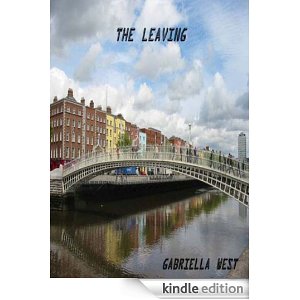
The Halfpenny Bridge over the River Liffey in Dublin seemed like a good cover image.

The Leaving, my first novel, is a coming-of-age story set in Dublin and has had a strange history: I started writing it at grad school at S.F. State in the late eighties (so it can officially be called an ’80s novel!). It had its beginnings as a short story published in the college literary journal Transfer in 1990 called “These Foolish Things.” It happened to be the first thing I ever got published, so I was excited.

The main character, Cathy, gripped me. I was using an adolescent voice very close to my own (she’s 15, I was 22, and I had grown up in Ireland feeling like an outsider), but even though the voice and observations are close to my experience, the book is fictional in many ways. Cathy is 15 when the the novel opens; she has a gay brother, Stevie, and the first conflict in the book comes when she realizes that he is attracted to Ron, the one boy she likes in her class–and that he’s going to win this particular contest. The first few chapter plunge Cathy into an immediate sense of loss, as her brother is the closest person in her life, and as she watches him courting Ron and becoming more confident in his sexuality, she feels she’s losing him.

Here’s a description that I posted on Smashwords:

At 15, Cathy Quinn is an intelligent misfit living in 1980s Dublin. As the book opens she discovers that her charming older brother Stevie, who’s gay, is falling in love with the one boy in school whom she likes. Over her last two years of school, Cathy struggles with her repressed, unhappy family, coming to terms with her powerful attraction to her best friend Jeanette, and leaving Ireland. “The Leaving” is a realistic yet lyrical look at adolescence and first love.

Above all, the novel offers a wry, raw look at growing up in the conservative, recession-plagued Dublin of the 1980s, when homosexuality was still taboo, and being different was not tolerated. 

Although the novelist Molly Giles, whom I studied with, loved the book, and my writing group at the time was a great encouragement, I still didn’t finish the novel until 1995. It served as a thesis for my masters in creative writing at S.F. State. I always hoped it would be published. And now… it is. Just in a different way than I expected, but I’m glad to finally bring it out into the light of day.

And I read the other day in the S.F. State alumni mag that Transfer has just celebrated its 50th anniversary. Nice.

The first 40 or so pages of the book are free to read or download on the Smashwords site. Do take a look.

View the book page for The Leavinghttp://www.smashwords.com/books/view/63117

View my author page on Smashwords.

And read Chapter One here!

Posted in Writing | Tagged , | 3 Comments