Book Review: After Mrs Hamilton

It’s almost the end of December, and it’s time to squeeze out one last book review for the year.

After Mrs Hamilton (Kindle, $4.99) is the second novel by British writer Clare Ashton. I loved her first book, Pennance, which was set in a small Cornish village and was told from the perspective of a reclusive female narrator mourning the death of her boyfriend and consumed with guilt, who eventually falls in love with another woman. Salem West in the Rainbow Reader called it a “modern Gothic romance” and perhaps that’s why I liked it so much!

After Mrs Hamilton by Clare Ashton

After Mrs Hamilton by Clare Ashton

After Mrs Hamilton is quite different! The image on the cover conveys sophistication, but also a female mask, a certain kind of deadness. This is a story of secrets, intra-generational secrets and secrets that women keep from each other. The two main characters are Englishwomen in their 20s, living in London. They both lead unhappy lives as the book opens. Clo is an escort for older lesbians, a people-pleaser, pretty, and a bit of a scatterbrain. She lives with her grandmother, Amelia, and has been essentially cast out by her own family as the black sheep. Laura is different: adopted, she broods about not knowing who her real family is, and is stifled in her marriage. She yearns for women but hasn’t let herself experience pleasure with a woman since college and her early marriage.

Laura and Clo are close, but don’t really know each other in a way. They do share a background of sorts, since Clo was raised in a small town called Middle Heyford and it turns out that Laura has a picture of her adoptive parents posing on a jetty there. But her adoptive parents died when she was young and she has no clue who her real mother is.

The slow unfolding of who Laura really is takes place over the course of the novel. In a parallel plot, Clo meets a woman who calls herself Mrs Hamilton at an escort rendezvous in the third chapter; “Mrs Hamilton” is actually an aging French film star. Clo falls in love with this woman her mother’s age when she discovers that the actress is living across the street from her and the development of their love affair is pretty gripping. I have to admit that some of the scenes between the attractive younger woman and the beautiful but definitely older woman were hard for me to take, though. I wondered whether this relationship was really the best thing for Clo… And while Laura meets an American friend of Clo’s called Susan, who appears to be a suitable partner for her as she transitions out of her marriage, it soon turns out that Susan is a problematic choice.

So, the book confronts taboos. It is constantly absorbing. Still, I found myself getting a little weary of the characters’ intense, whirling emotions. The women are constantly weeping or nervously vomiting (in Laura’s case) as revelations unfold. Characters are constantly pursuing or being pursued. There is a nasty fight on a London street where emotions get really primal. I also found it hard to believe that Laura was a doctor; we never see her in a work environment.

The book began as enjoyable melodrama for me, but by the end, it had softened enough that I realized I’d come to care about the characters. Their situations were vivid, but I constantly wondered if they were believable. It is the kind of book where the author holds the cards close to her chest and we don’t get all the answers till the very end. I understood why Clo and Laura were both so “crippled,” and I liked that at the climax, it seemed that each pair of unconventional lovers were able to meet each other halfway.

This is certainly a sophisticated read: a multi-layered European novel that reminded me of Cesare Pavese’s Among Women Only. Like that book, set in Milan among fashionistas, Ashton’s world of secretive women—at least to me!—is claustrophobic and a bit impenetrable. Ultimately, I was more charmed by Pennance, but I think I will remember After Mrs Hamilton more vividly.

Posted in Reviews | Tagged , , , , | 2 Comments

Rowling’s ‘Casual Vacancy’ Strikes a Nerve

‘The Casual Vacancy’

by J.K. Rowling, Little, Brown ($35 hardcover); Kindle ($14.99)

Joanne Rowling is a woman with a ton of baggage. As her own writer bio on Amazon states, she’s the author of the “bestselling Harry Potter series of seven books…. which have sold more than 450 million copies worldwide…. and have been turned into eight blockbuster films.” Even in that sentence, one can read unnecessary hype, the sort of boasting which surely a very rich author does not need to do.

A recent profile in the New Yorker by Ian Parker, timed to emerge just as her first adult novel, The Casual Vacancy, was published, filled in some of the vague outline of the Rowling story with some troubling details. I was familiar with the now-mythical story of Rowling writing the first Harry Potter book in an Edinburgh café while she was an impoverished single mother. Due to some astute research by Parker, mingled with the sense that he obviously did not like her much, we get the picture of a worried, perfectionistic woman—the owner of several houses—now married to a doctor; a control freak who dropped her first agent once she became powerful enough; an introverted, depressed young woman who lost her beloved mother to multiple sclerosis when Rowling was only 25; a single mother who was literally thrown out by her first husband, a Portuguese journalist, when her first child was a baby; and someone who is estranged from her father and was bitterly hurt when he sold her personally inscribed first edition Harry Potter and the Goblet of Fire at auction for $48,000 a few years back.

Rowling has always been treated rather dubiously by the media. For example, Parker questions the “impoverished, isolated young writer” legend, implying that Rowling came back to England from Portugal with a master plan to write the Harry Potter books; she had the series all mapped out in her mind and was helped by family and friends to get by for the few years it took to sell the first book. And indeed by 1996, Bloomsbury had picked up Harry Potter and the Philosopher’s Stone, and the rest is history.

I resisted Harry Potter at first because of the hype. But that English paperback edition of Philosopher’s Stone, which my mother sent me in the late 90s, was a charming, slim volume (unlike the later bloated hardcovers published by Scholastic), which drew me in. I loved the freshness of it; I loved Harry as outsider. Ron, Hermione, Hagrid, Dumbledore: it was an enchanted world where bad things happened, too… bad things were always lurking on the outskirts of Hogwarts and infiltrating the school. The insider/outsider dynamic of the Harry Potter books worked for me, as it did for so many others. Rooting for Harry and his gang allowed readers to feel like insiders, the insiders we never were, the heroes we were never allowed to become. There was something undeniably therapeutic and powerful about these books. And Rowling, who has said she loved the Smiths, my own favorite subversive band of the ’80s, was clearly working out issues of her own with this series.

Still, I never thought Rowling would actually write another book. Why should she? She’s wealthy, she’s respected, what more would there be to do? When I heard she was writing a novel and when I found out it was called The Casual Vacancy and saw the stylish red cover with the checkmark, my first reaction was to think, oh dear, she’s writing some sort of social comedy of manners set in London—something about a vacant flat, no doubt…

With her habitual penchant for secrecy, Rowling kept everyone guessing about her intent, which of course is a dangerous thing to do, because people have their expectations and they also don’t enjoy being wrong. I’m sure most of her readers expected Rowling to write a “nice” book. OK, an adult book, but still, a nice literary novel that didn’t rock the boat.

Well, consider the boat rocked! Casual Vacancy is currently #1 in literary fiction on Kindle, but its rating is a miserable three stars. The minute the book went on sale at the end of September readers noticed problems with the font—which was hurriedly fixed—but complaints about the extortionate Kindle price raged and people gave it one star just for that. (Update: the price has now dropped to $14.99.) And then there were the readers who simply hated it. Who weren’t prepared for the type of book it was—filled with sex, emotional and physical violence, death, bad language, and nasty characters. A common complaint was that there wasn’t a likeable character in the whole book. There wasn’t anyone to root for.

The few short excerpts that I’d initially seen of The Casual Vacancy seemed jarring and awkward. They didn’t give me any indication of the power of this book. Frankly, I see The Casual Vacancy as a 19th-century novel, both for its length and the slow intimacy with which we come to know the characters. The small, picturesque town of Pagford, where most of the action is set, is a character, too. Howard Mollison, the fat, avuncular proprietor of the local upscale delicatessen, sees it as *his* little patch of England:

To Howard, his birthplace was much more than a collection of old buildings, and a fast-flowing, tree-fringed river, the majestic silhouette of the abbey above or the hanging baskets in the Square. For him, the town was an ideal, a way of being; a micro-civilization that stood firmly against a national decline.

But Rowling, it becomes clear, does not see Pagford as idyllic. Pagford, in fact, in this audacious book, becomes a symbol of modern England in decline—chilly, hostile, and unsympathetic to outsiders or the undeserving poor:

A sharp breeze lifted the hems of skirts and rattled the leaves on the immature trees; a spiteful, chill wind that sought out your weakest places, the nape of your neck and your knees, and which denied you the comfort of dreaming, of retreating a little from reality.

Reading Vacancy, my mind kept going back to classics like Tess of the D’Urbervilles or Return of the Native, where we come to know the characters intimately and have to watch in horror as they are brought down by a tragic flaw or a cruel social structure. The book opens with a sudden death: fortyish Barry Fairbrother keels over in front of a restaurant and dies on the night of his nineteenth wedding anniversary, while wife Mary stands over him in horror, and a local couple, Samantha and Miles, rush to help.

It takes a long while for the tragic implications of Barry’s death to become clear. In the meantime, the most practical result of his death is that a “casual vacancy” has arisen on the local council. Howard Mollison is thrilled, because Barry was a proponent of keeping Pagford financially tied to a nearby slumlike council estate with the ironic name of The Fields. Howard’s mission is to separate Pagford from The Fields, and with Barry gone, he thinks he can finally do it. An unpopular female Indian doctor, Parminder Jawanda, is Barry’s ally on the council. Howard and his business partner crony, Maureen, are spitefully pleased to be the first to tell her the news of Barry’s death and are quietly amused at her stunned reaction—but they’re more focused on what they can achieve politically:

Both, as they watched Councillor Jawanda disappear around a corner, were contemplating the casual vacancy: and they saw it, not as an empty space but as a magician’s pocket, full of possibilities.

The Casual Vacancy could have been a rather petty comic novel and it does have traces of comedy and grotesqueness. Howard Mollison and his wife Shirley are spiteful and dull and conniving; their daughter-in-law Samantha Mollison loathes being dragged around to her husband, Miles’s, parents’ home and spends the novel in a state of mounting rage at her deadened marriage and narrowing prospects:

Disgust rose in Samantha like vomit. She wanted to seize the overwarm cluttered room and mash it between her hands, until the royal china, and the gas fire, and the gilt-framed pictures of Miles broke into jagged pieces; then, with wizened and painted Maureen trapped and squalling inside the wreckage, she wanted to heave it, like a celestial shot-putter, away into the sunset.

Many of the characters are in a state of repressed rage. In a clever twist, the least powerful characters, the adolescents, use the Internet as a means to separately spill ugly secrets about their own families, targeting the parent they feel the most rage at. The name they use to post with on the town site is The Ghost of Barry Fairbrother.

The first to post on the site is Andrew Price, who in another kind of novel would have been the hero. Teenage Andrew hates his father; his parents are locked in a codependent relationship, with his father Simon being the domestic tyrant. The scenes where Simon vents his rage against his family are authentic and terrifying. But Rowling is deft at showing Andrew’s growing disillusionment at his mother as well:

As a child, his parents had appeared to him as starkly black and white, the one bad and frightening, the other good and kind. Yet as he had grown older, he kept coming up hard in his mind against Ruth’s willing blindness, to her constant apologia for his father, to the unshakable allegiance to her false idol.

The novel is partially about Pagford’s children warring against their parents, and that is certainly an enjoyable subject, one we can all relate to. But Rowling is not content to depict middle-class adolescent rebellion. She goes even deeper, exploring a family from the Fields housing estate, whose daughter, Krystal Weedon, goes to school with Andrew and his unpleasant friend “Fats” Wall. Krystal barely has a family at all: a mother, Terri, who’s a chronic heroin addict and former prostitute, a little brother who is learning disabled and neglected. One of the most powerful scenes in the book is when social worker Kay comes to interview Terri and tries to get through to her that her son is in danger of being taken away. Terri is barely there, a wispy wretch of a woman who can scarcely form a coherent thought. Yet Kay, enmeshed in her own personal problems, has this unexpected insight: But not to feel, not to care…Right now, Kay thought, she’s happier than I am.

Rowling’s treatment of class goes deep. In fact, it’s at the heart of the novel. Despite the miseries of the middle-class characters, their lives are not literally on the line. As I progressed through The Casual Vacancy, I had the unsettling feeling that most of the characters were doomed. But by the end, it’s clear that the middle-class characters are essentially safe. It could be argued that Rowling denies some of her characters humanity in her rush to make the point that working-class characters are the true losers in modern English society.

But Rowling’s depiction of working-class life isn’t boring—it’s gripping. And she has done an amazing thing. She’s made the pathetic figure of Terri Weedon human and relatable. When Rowling delves into Terri’s terrible backstory, which unfolds as the matriarch of the family, Nana Cath, is dying, we are shown in flashback that Terri simply never had anyone to stand up for her. And the welfare state, as embodied by the careless and overstretched “care” of the social workers, just isn’t good enough. Krystal, Terri’s daughter, as feisty and strong as she appears externally, has had only one advocate, a man who’s no longer there—Barry Fairbrother. In flashbacks we see that Barry, who grew up in the Fields himself, encouraged Krystal to join the school rowing team, which he coached, and amazingly they won… but Krystal’s moment of glory was brief, and Barry’s death has been devastating for her.

I was deeply affected by The Casual Vacancy, and I didn’t expect to be. There were moments in the book where I choked back tears. The most powerful moments were the swift flashes of insight, lyrically expressed. Was it love when somebody filled a space in your life that yawned inside you, once they had gone? a character asks herself. The internal worlds of the characters are fraught and lonely; each relationship Rowling examines seems frayed or deeply dishonest in a very true-to-life way.

And so the actual vacancy on the parish council doesn’t matter as much in the end. The book seems to be more about the ways in which we can all come together, or connect, but we choose not to. And when we make that choice, or society does, terrible things can happen in the gaps that open up. I never thought that a Rihanna song would come to have such tragic import, but in this remarkable book, it does, played at the two funerals that bookend the novel.

I’ll wave a magic wand and make a prediction about Rowling’s literary career from here on out. Casual Vacancy will slowly come to be regarded as the brave achievement that it is. Rowling will come out with her next book, but it will not go to number one. Her literary novels won’t ever be as beloved or “bestselling” as the Harry Potter books. But Rowling will have serious literary cred. Whether she enjoys it or not is up to her.

Posted in Reviews, Writing | Tagged , , , , , , , | Leave a comment

Fifty Shades of Grey – A Quick Take

My friend Shannon Yarbrough has been recapping each chapter of Fifty Shades of Grey on his blog, accompanied by hilarious visuals. Confession: I sent him my copy after finishing with it, wondering what he would get out of it, as a gay man! Turns out, quite a lot of satirical fun, though Shannon has ended his 50 Shades recap in as world-weary a mood as I was when I finished the bestselling … pile of crap. For Shannon, the book points up the idiocy of the heroine, Ana, and the entirely unbelievable straight male dominant “heartthrob,” Mr. Grey. For me… yes, I was briefly sucked into the book but ended up feeling as emotionally bruised as Ana (but by E.L. James’ writing, not by Mr. Grey, I might add!).

What women are reading these books for is not sex, but the love story, that’s clear… And what the love story consists of is the time-old tale of a woman trying to convert a man into making him worship her while he makes plain by some of his actions, if not his words, that he is using her and objectifying her and will drop her quickly if she becomes boring. So her challenge is not to be boring, to be all perky and combative. But sadly, Ana is boring. The book is boring. The sex pretty quickly becomes boring. The only juice in the entire thing is the suspense of the power struggle between these two one-dimensional people. In the cruelty of the emotional power struggle—in Ana’s emotions as she tries to make Grey “love” her—E.L. James does occasionally hit the bedrock of truth.

Anyway, here’s Shannon’s post:

Fifty Shades of Grey – Chapter 26.

Posted in Reviews, Writing | Leave a comment

July Book Review: Building Character by Kate Genet

‘Building Character’

by Kate Genet, 2012, Kindle/Smashwords ($6.99)

 The summer months are difficult ones for indie authors, who tend to see sales of their full-length ebooks diminish. A book that came out last month without much fanfare is Kate Genet’s latest, Building Character, and it’s an accomplished work that deserves a second look.

The tale rather deliciously dwells on a well-known writer’s anxieties, as she finds a seductive character from her own work becoming real and slipping into her day to day life, with disastrous results.

Fen Marshall (it took me a while to realize that both the names suggest slippery and low-lying places) is a successful New Zealand writer, a lesbian, and clearly not a nice woman. Genet establishes this firmly in the first chapter, as 40-ish Fen leaves the fancy home where she lives alone in great comfort to rendezvous with a young woman, Marissa, who met her at a book club. They meet at a jazz joint, where the sultry singer has already been one of Fen’s pickups and is still flirting with her. Marissa turns out to be a sort of pining literary groupie, and Fen quickly disconnects from her. Her longtime friend Simone shows up the club and is planning a birthday party for her, but Fen is less than enthusiastic, clearly used to being the kind of person who fends people off and participates reluctantly in group activities.

Genet treats us to a luscious, no-strings sex scene between Fen and the voluptuous singer backstage. Fen doesn’t go in for relationships, and she has her life completely sorted out.

It’s risky to write about a woman who basically doesn’t like people and doesn’t treat them very well. The book becomes increasingly strange when Fen returns to her writing, which she always does in a state of manic high. A character in her 1940s mystery novel springs off the page and into Fen’s bed. Ruby is a red-lipsticked sex bomb, but also a clever manipulator. Fen eagerly seduces her, though from the minute Ruby appears, she is unable to write as she was before, focused so intently on Ruby’s physical charms as she is.

The novel seems as if it’s going to be about Ruby’s ulterior motives, her designs on Fen’s money, and Marissa’s buffoonish attempts to attract Fen’s attention and affections by waiting outside her home in the snow. I at first assumed that Fen, Ruby, and Marissa would battle to the end in a competitive triad. And that could have been an interesting novel.

But what “Building Character” seems to really be about is a writer’s anxieties. Writers, after all, create and control their characters, and writing, especially if it’s going well, can seem like playing God. Ruby is a manifestation of Fen’s dark side, and Fen finds herself first enchanted and then horrified by her, as her coldness is revealed. The novel slowly becomes about Fen’s quest to kill off her dark side–which is difficult, as Ruby has co-opted so much of her vital energy, even going so far as to take over Fen’s beloved computer!

How long had it been since she’d felt that way? Since she’d sat at her desk and let the words flow?

Too long. Now here was Ruby, high as a kite, juiced on the creative process and she, Fen was still in pyjamas and robe, sleep rumpled and feeling like some homeless person dragged in from the curb for a cruel and callous look at the good life. She rubbed her face and felt the whispering of thin dry skin again, like autumn leaves rubbed together. And under the skin her bones grated together. She looked at the beaming, vibrant Ruby and stopped walking.

 Ruby hadn’t looked that young and fresh two or three days ago.

 Fen hadn’t felt this old two or three days ago.

 She was losing the plot all right. She was losing the threads of her own life story.

 So “Building Character” is not so amoral after all. Many of Genet’s books revolve around the identifying and destroying of familiar monsters. Here the monster springs from the writer herself, and Fen’s responsibility is clear.

A few quibbles. The book should have had one more proofread, and although I loved the description of hair that “shone like a chocolate waterfall,” not one but two characters were described this way.

I was uncomfortable with the treatment of the character of Marissa, who becomes targeted by Ruby. Fen’s friend Simone is one of the few decent female characters in the book (another is a police detective who shows up toward the end). Simone and her girlfriend are put through dangerous ordeals, having involved themselves in Fen’s troubles, but Genet gives the couple this sweet insight:

“There was going to be a happy ending because they would make one for themselves. Life wasn’t a fairy tale. It wasn’t even a story with every page written. It was a leap of faith.”

“Building Character” becomes absolutely suspenseful as it heads toward a climax, as a weakening Fen must race to catch up with an escaping Ruby. The fact that their ultimate confrontation is constructed as a sort of powerful energy exchange was pleasing to me as a reader.

Although the book flirts with amorality and sadism, it ends up being the profoundly moral tale of a woman who must take care of the shit that she’s created–because she’s the only one who can!

It’s clearly the creation of a seductive and vigorous writer at the height of her powers.

Gabriella West is the author of ‘The Leaving’ and ‘Time of Grace.’

Posted in Reviews | Tagged , , , | 4 Comments

May Book Review: Pennance by Clare Ashton

‘Pennance’

by Clare Ashton, 2012, Createspace pbk (8.99)/Kindle ($2.99)

When I first came across Clare Ashton’s debut novel on Kindle, I confess I frowned slightly at the title and thought that it was possibly a typo for “Penance.” It’s not, of course, but it is a superbly written mystery/love story set in a bleak little Cornish village, and the title is all too apt for the main character’s state of mind throughout.

Because the main character, Lucy, is not stereotypical of a “lesbian heroine” at all. She’s not a rugged go-getter or a brash adventuress. She’s a mousy 26-year-old Englishwoman who lives alone in a remote country cabin, yes, but only because her older boyfriend, Jake, perished in a horrific car accident one year before the story opens. An accident that still torments Lucy, as she pulled herself to safety and watched Jake burn. It is slowly revealed over the course of the novel that Lucy did not love Jake, and this fuels her guilt.

When we meet Lucy, the mood is set at once. She’s in a shop, hearing the whispers of the locals, who pity her, and she can barely function as she numbly moves about collecting tins of soup for her upcoming week of dinners. Although the word PTSD is never mentioned, it’s clear that Lucy suffers from it. Here’s Ashton’s brilliantly effective description, as Lucy glimpses herself in the shop mirror:

“I had never bothered with much makeup. Now I no longer bothered at all. My face was uniformly pale, undulating plainly over my cheeks with horizontal impassive lines for eyebrows and a mouth. I had my hair tied back which made me look more featureless. I was stooping, cowering over my basket. I could feel that I was drawing people’s attention the more I tried to hide. I couldn’t stand up straight and confident though.”

Lucy throughout the book is having confrontations she doesn’t want to have. She has to deal with the fear of living alone in her dark, cluttered cabin, worrying that someone is out to get her. She has to dodge Jake’s aggressive mother, who wants to pursue a case against the local garage owner for negligence leading to the accident. She has to keep Jake’s younger brother Ben, who fancies her, at arm’s length. She has to try to keep her sanity.

I get the sense that Ashton has been influenced by writers like Zoe Heller and Sarah Waters; there’s even a hint of the film Truly Madly Deeply, starring Alan Rickman, and Juliet Stevenson as a woman whose dead lover keeps reappearing in her house. Lucy feels Jake’s cold presence on and off, though he is not an angry ghost.

What I loved about this book was that although Lucy is in some ways an unlikeable narrator, she’s not an untrustworthy one. And so we root for her. And as she forms a warm friendship with the neighbor lady, Karen, who once dated Jake, we actually hope that Lucy can find some happiness.

Lucy is always out for a run or dashing around on her bike in the rain. For such an introverted narrator, she has a tough, tomboyish side. She works as a web programmer, a traditionally masculine occupation. She loves the countryside, with its mercurial weather, and there is a sense that the remote rural surroundings are both haunting and healing.

Ashton does descriptions of landscape very well. Here Karen and Lucy are out taking a walk and enjoy a moment’s peace:

“I don’t mind. I never get bored of this coastline. It looks different every day,” I said, watching the greys of the sea darken and swirl with the changing cloud overhead. Streaks of shimmering silver lit the grey water where the sun broke through the cloud in thin cuts. We watched a beam of sunlight narrow and fade as another one blinked open on another patch of sparkling water.

As Lucy grows closer to Karen, who is recovering from a bad breakup with her husband, we see a different side of her, protective. She loves Karen’s young toddler son but only tolerates Karen’s strangely jealous preteen daughter, Sophia. The love story takes place in fits and starts, and there are times when it seems like it will be thwarted by bad actors on all sides, or by Lucy’s timidity and fear (or inexperience).

This is not a sweet novel, for the most part. Lucy feels menace around her all the time, and a series of threatening incidents leads up to an attempt on her life. The well-drawn characters are burdened by inner and outer demons, but it serves to make the book more mesmerizing. I find that the most interesting lesbian fiction nowadays is told at a slant. The romantic relationship between the two women is not highlighted as the most important thing in Pennance, but neither is it squandered, and the story ends on a loving note of relief from stress and unease, which reminded me of Pip and Estella’s belated reconciliation at the end of Great Expectations.

And yes, I checked: Pennance exists and actually IS a village in Cornwall…

Posted in Reviews | Tagged , , , , , , , , | 2 Comments

St. Paddy’s, Green Beer, and a free ebook today

I want to make a confession: I’ve never sampled green beer! You see, I grew up in Dublin, where in the 1980s, the St. Patrick’s Day parade, held in still-freezing March temperatures, was a fairly sombre, pallid march down central city streets. It was helped along by middle-aged Americans looking cheerful and wearing green or plaid trousers, looking like they had just stepped off a golf course, and marching bands from America, which were fun to watch and listen to. All I can remember besides that were floats from Irish insurance companies, the only companies that had any money in the 80s. And if we were lucky, the family got a post-parade meal of burgers and chips at an Americanized cafe called Solomon Grundy’s around the corner.

Anyway, when I came to America in my early 20s, it was a revelation to me that people got drunk and had fun on St. Patrick’s Day, that there was even a genuine sense of joyousness about, an excuse to have a party! And they drank green beer, I marvelled. I had never seen green beer in Ireland. It was one of the long litany of things we “didn’t have” there.

But I’ll say that almost 25 years after leaving, I treasure getting an annual St. Patrick’s Day card from my 94-year-old grandmother, a Dubliner who lives in Wicklow. The Irish treat St. Patrick’s Day with irony, even humor, now. Perhaps it’s turned into a genuine day of celebration over there, with the Catholic Church on its way out.

cartoonI came across a Patrick-related cartoon on Facebook yesterday that made me burst out laughing.  I think it expresses the silliness of venerating a man for driving snakes out of a country. I suspect Ireland would welcome the snakes back now.

Here’s a question I wouldn’t have thought to ask a few years ago… What’s in green beer? Well, dye, of course. It turns out that food dyes are not benign–they’re pretty bad for you actually, since they’re made from petroleum-based substances. For green beer, the food dyes used are a mixture of FD&C blue and yellow (and also paraben, a rather nasty preservative that’s in most everything). But it turns out that the most toxic food dye is Red No. 40, known as Allura Red in the U.S.

Now hyperactivity in kids has been proven to be linked to food dyes. Last year I wrote a report on ADHD and food dyes for a health website. Is ADHD Caused by Diet? The Food Dye Problem is up on Kindle now and it’s free today. Pick it up if you’d like to learn more about ADHD in kids and adults, and how to avoid particular foods which are laden with food dyes in the U.S. Many of them are specifically marketed to kids, of course.

But don’t let that stop you quaffing the green beer. As for me, it’s on my bucket list, meaning things to put off trying down the road…:)


Posted in Health, Personal | Tagged , , , , | 2 Comments

Happy New Year

2012's dragon is a water dragon, apparently a softer type of beast. (photo credit: Dixie Allan)

Happy New Year to readers, with a special thanks to my faithful blog subscribers! You know who you are…

I’m hoping the Chinese Year of the Dragon, which starts on Jan. 23 according to my desktop calendar, will bring us some relief from the Year of the Rabbit, which made 2011 more than a little crazy. Earthquakes, the tsunami, the death of a loved one’s father, relationships transitioning, friends losing supposedly secure jobs they’d worked at for many years–everything seemed up for grabs in the unfortunately toothy Year of the Rabbit.

I was glad to see the old year go out.

For any writers who are interested in my editorial services, I’m changing my price structure in the New Year. After working on several manuscripts, I realized that what I offer clients is more than proofreading: it’s a light (but very thorough) copyedit, and my pricing should reflect that. Hop on over to my editorial services page to check out the new information.

Posted in Editing | Tagged , , , , , , | Leave a comment

New story–The Captain and Claire

In an unusual bit of serendipity, I had just published a new erotic short on Amazon, when KDP (Kindle Direct Publishing) announced today that it is rolling out a new program called KDP Select. In return for not offering a particular work for sale on other digital platforms, writers get to share in a sort of “lending library slush fund” that Amazon’s created, since they are allowing Kindle Prime users to “borrow” one free ebook per month.

‘The Captain and Claire’ makes its ebook debut.

Long story short, “The Captain and Claire” is available now at $2.99, and can be borrowed for free by readers who have signed up for Amazon Prime.

Here’s the ebook description from the Amazon site; the story was originally published in Best Women’s Erotica 2004:

New York, 1930. Bubbly young blonde Betsy Parker is left a widow at only 25, after her older banker husband commits suicide in the aftermath of the Wall Street Crash of 1929. Her family sends her off on a voyage to England by ocean liner. Innocent and curious to explore, Betsy attracts the attention of both the ship’s captain and an experienced and exotic English artist, Claire, who initiates Betsy into the delights of lesbian sex. 

In this intensely erotic tale told in the form of first-person diary entries, Betsy is pulled between wild sexual encounters with the dominant captain and her deepening bond with Claire. Whom will she choose?

Posted in Self-publishing, Writing | Tagged , , , , , | Leave a comment

Indie author spotlight–Kate Genet

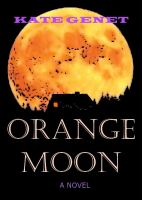
To showcase some of the great indie writing out there, I want to do a occasional profile of writers who are producing impressive work via ebook. Kate Genet is an eclectic and prolific New Zealand novelist who is perhaps best known for her Silent Light/Shadows Fall series about a pair of lesbian paranormal sleuths, yet her latest taut, beautifully written story, Orange Moon, has universal appeal.

As the story opens, Alice is a battered and numb young woman, worn down by routine physical and psychological abuse from her husband Richard, overwhelmed by stress, pain and fear. An encounter with a “crazy lady” on the bus on the way home from a shopping trip brings up dark memories for Alice.

The fascinating thing about this novel is that it’s both the suspenseful story of a woman escaping an intimate abuser, and a woman coming to terms with her past memories of teenage sexuality, paranormal and violent events, some of which she may have been more responsible for than she thinks.

Alice makes the fateful choice to “leave” her marriage but stay in her much-loved house, cleverly hidden from Richard (she assumes). This sets up an almost unbearable tension in the novel.

While a final confrontation with Richard seems both ugly and inevitable, a healing and beautiful relationship also develops for Alice.

Unlike the rote and clichéd lesbian sex scenes in much American writing, in both of the recent novels I’ve read by Genet (Remnant being the other), the love scenes between women are fresh and real, shimmering with possibility…

But I found Orange Moon to be more to my taste than Remnant. Readers of paranormal books will love the ghostly element, the mystery. I personally found the scenes of domestic abuse far more creepy and compelling. I loved watching a woman coming to terms with her own strength. This book is a contemporary feminist classic that reminded me of long-forgotten books from the 1970s like Lois Gould’s A Sea Change. You won’t be able to put it down.

Available on Smashwords and Kindle for $4.99.

Posted in Reviews | Tagged , , , , , , , , , | 3 Comments

Bob Mayer speaks up

Bob Mayer, whom I mentioned in my last post, wrote this great new blog post today–very blunt, very scintillating–about the nasty divide that’s opened up between traditionally pubbed authors and indie authors, each claiming their turf and saying their way is the only way to go. It’s worth reading in entirety, but here’s what his message boils down to, I think:

“Here’s the real bottom line to the ‘raging fuck wads’ on both sides.  The day comes the other side offers you a deal, or presents an opportunity that’s good for you, tell me you won’t take it or do it.  Then I’ll believe you.”

As a writer, I think there is a real argument for fluidity, because we don’t really know what the future holds.

In my own case, I have several book projects on the boil or in mind that I would like to see in print in the next few years. And I hold out hope for that.

But having just gotten my first Smashwords and Kindle royalties in the last week, I’m feeling happy that I took this road in 2011 for my novel The Leaving and short story The Doge’s Daughter. They are being seen and they are being reviewed. It’s a good feeling!

Since I’m not one of the big boys, so to speak, I don’t have to angrily defend my choices…

Posted in Writing | Tagged , , , , , , | 4 Comments