Time of Grace Preorder and Cover Reveal

Last month I did an in-depth Q&A over at Smashwords. I really enjoyed putting some of my thoughts down about the writing process, self-publishing matters, and upcoming books. I keep adding to the interview—feel free to check it out here!

So, my last publication was in June, with the nonfiction ADHD memoir Connecting the Dots. That still continues to be available only on Kindle, but I will make sure to publish on Smashwords, Apple, and Barnes and Noble by the end of the year.

Time of Grace on Preorder

I’m switching gears, though, and bringing out the first (updated and revised) ebook edition of Time of Grace, my LGBT historical novel set in WW1-era Ireland that has up to now been available only in print!

Time of Grace is an intimate love story between two young women, Caroline and Grace, who meet as servants at a big Irish country house in 1915 in an atmosphere that’s similar to Downton Abbey in its rigid class structure. It’s also a dynamic historical novel tracing the events leading up to the Easter Rising of 1916, which led to Irish independence a few years later. While Englishwoman Caroline is initially apolitical, Grace is a fiery revolutionary with links to the Irish rebel movement. Both characters must make difficult choices about whether to commit or whether to pull away.

Time of Grace is currently on preorder, which means that you can currently reserve a copy on Apple, Barnes & Noble, and Kobo! It will be released Saturday, October 12, at the special introductory price of $3.99. A long sample is available here.

A Word about Covers…

Time of Grace

Time of Grace

The print version was published 12 years ago by a small Irish press with a rather sultry but generic cover, a picture of a woman’s upturned face. It didn’t get across the sense of the period at all and there was no sense from the image that this was a lesbian love story…

TofG_Finalsmall

Time of Grace 2013

A talented writer friend who also does professional covers provided me with a collage-type sepia-tinged image that shows both women together, as well as objects evoking the historical period and Ireland. I think it nicely captures the adventurous and tender tone of the novel.

As the book’s author, who was only in my early thirties when it came out, I would love it if the book found a wider audience this time around. Let me know what you think of Time of Grace

Posted in Self-publishing, Writing | Tagged , , , , , , , , , , , , , , | 2 Comments

WomenI found Alana Munro’s Women Behaving Badly: Exposing the Truth about Female Friendship (Kindle, .99) on a site called something like Kindle Books and Tips, and I downloaded the sample.

Honestly, I wasn’t expecting the book to be as focused and perceptive as it was! I chuckled ruefully throughout, especially in the first half, because what I was reading was so powerfully perceptive. Munro makes the point that men’s friendships are respectful **because** they keep a safe emotional distance from each other. Women, though, get instantly close emotionally but expect constant attention and caring. When women don’t receive this, Munro says, they will shut down the friendship almost immediately.

Another horrifying scenario she explores, which I have personally experienced, is the way an alpha female takes over a group, and if she doesn’t like or trust you, you’re out. This can happen even in a longstanding group of supposedly close female friends. The other women will not protect you, nor will they “call out” a bully. Munro gives psychological reasons for this—but despite her cool reasoning, I sensed a real anger throughout the book at what she had experienced from the hands of other women. This anger is too obvious at the end when she gives a sarcastic Thank You to all the women who’ve treated her roughly. I think in time she might decide to go back and tone that part down—but it must have been cathartic to write!

Here’s an excerpt from the book, which shows Alana’s smarts about the precariousness of women’s friendships:

Just one misguided comment, one silly step, one stupid mistake or one wrong look and you risk being rejected.

You also risk rejection if you are not supportive enough, if you are not pretty or cool enough, if you are not agreeable enough, if you are not attentive enough, if you are too different from the other females, or if you are someone who misses important events in their life. You’re booted out of camp, sister!

I appreciate the way that the author gives tips for building healthy female friendships, though I ended the book wondering if such friendships actually exist…

The book also allowed me to pinpoint some problems with my own behavior as a friend over the years. It’s important to look in the mirror, too.

Posted on by Gabriella West | 4 Comments

Fukushima: Pacific Ocean poisoned, millions at risk!

Fukushima-meltdown-prevailing-winds1Fukushima: Pacific Ocean poisoned, millions at risk!.

An important issue, which I decided to reblog. Click the above link for more info…

And here’s an excellent article from the Guardian:

http://www.theguardian.com/world/2013/aug/09/fukushima-fallout-threatens-fishermens-livelihoods

It reminds me of the Chernobyl disaster, which happened when I was in my late teens. There was a cover-up there as well. In the days after the disaster, radioactivity-laced rain fell all over Europe. (Of course it was much, much worse for people in the Ukraine, closer to the scene of the meltdown.)

Anyway, I hope that the world can now turn its attention toward Japan again. History shows us that the health risks of these type of events are always worse than we think (or are told) at the time.

UPDATE: The Japanese government is now planning to build an “ice wall” around Fukushima to hopefully prevent further radioactive water leaking into the ocean. There’s a KQED radio hourlong Forum program about it tomorrow (9/5/13) and I plan to tune in. (Check out this page at any time to download audio of the program!)

Posted in Health, Personal | Tagged , , , , | 1 Comment

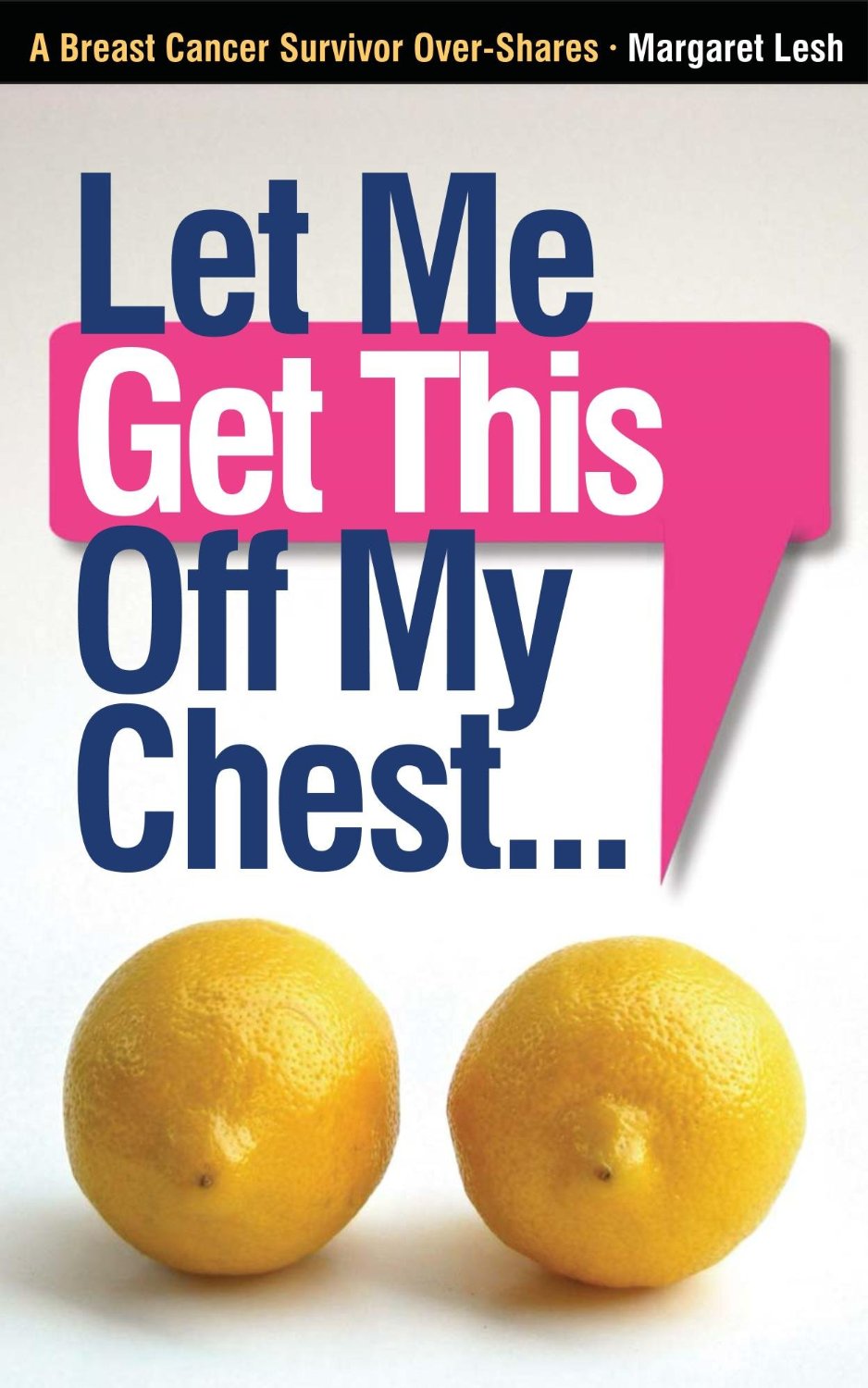
Let Me Get This Off My Chest: A Breast Cancer Survivor Over-Shares, Margaret Lesh. StoryRhyme.com Publishing, July 2013, Kindle Edition .99

LeshCoverMargaret Lesh strikes the right note here in her account of the “floating year” she spent going through diagnosis, surgery for a bilateral mastectomy, implantation surgery, and recovery. This charming little book with the funny title could have been a lot of things, but the author, who’s a Southern California novelist and freelance court reporter, doesn’t overshare—despite the subtitle!

Lesh writes that she was first diagnosed with breast cancer in 1999 when she was only 34, and had a lumpectomy. Then, in 2012, she made the alarming discovery of another lump in the same breast. “I’d been warned that if there was a recurrence, mastectomy was the only option—no more cutting,” she writes. She then had to make the tough decision whether to have her noncancerous right breast removed as well, and she opted for that.

Lesh has also blogged about cancer, and the book is a sort of cancer journal of her year; it’s made of of short chapters that are like little meditations. Skilfully formatted, with wonderful quotes beginning each chapter, Lesh dwells just enough on each physical ordeal she has to go through, and touches slightly on the emotional part as well, but not enough to overwhelm the reader. The tips that she ends each chapter with are super-informative. I would call LMGTOMC a sort of “Breast Reconstruction for Dummies” except that Lesh’s sweetly sincere, funny, yet somehow quite private personality imbues the book with a real sense of intimacy, like she is telling secrets over the dinner table.

As one of her quotes, from Erma Bombeck, says: “There is a thin line that separates laughter and pain, comedy and tragedy, humor and hurt.”

I felt myself rooting for the author and glad that she is in a happy marriage, which clearly sustains her and keeps her the balanced and kind person that she is, despite having had to go through what some might consider a tragic ordeal. And in fact Lesh admits that the cancer has been life-changing: it’s helped her appreciate life, she cries much more easily, she laughs more easily too.

She gives the reader permission to chuckle along, too, with phrases like “Frankenboobs.” (Or a grotesque yet funny incident of a friend’s reconstructed nipple falling off in the shower…!) A few years ago, reading this, I might have thought Lesh was too much in denial, not angry enough about what happened to her, and so on. Now I can feel her bravery and optimism shining through—and that’s just what women who’ve been diagnosed with breast cancer and face scary choices need. Good job!

Posted on by Gabriella West | Leave a comment
Connecting the Dots (Kindle, $2.99) was published on June 15.

Connecting the Dots (Kindle, $2.99) was published on June 15.

Connecting the Dots, my recent ebook about women and AD/HD, and my own journey to diagnosis, received its first 5-star review on Amazon from Southern California writer Margaret Lesh. She called it “a valuable guide.” Thanks, Margaret!*

To celebrate the end of Mercury Retrograde, among other things, I decided to run a free promo of Connecting the Dots on Amazon.com and .co.uk on July 21, 2013. So look out for it and pick up a copy if you’re interested. I am always thrilled to get reviews, so please don’t be shy.

*I will be reviewing Margaret’s new book Let Me Get This Off My Chest on this blog soon.

Posted on by Gabriella West | 2 Comments

Connecting the Dots: My Midlife Journey with Adult AD/HD Is Published on Kindle

Two anniversaries slipped by recently. One was the two-anniversary of publishing my novel The Leaving on Smashwords (May 30, 2011). It was my first step into self-publishing and I had no idea then that I would end up publishing so many shorts on Kindle. Now my Smashwords and Kindle catalogs are roughly equal, which I’m happy about, as I enjoy reaching readers on BN, Apple, Kobo and Sony.

The other anniversary, I’d completely forgotten about. It was a simple email from Examiner.com, congratulating me on being a member of their team for four years. I found this amusing because I have not blogged for Examiner for a couple of years (nor earned any money from them!), but there I sit in their database, evidently. Although I cannot recommend Examiner as a venue to blog for—it is a content farm and writers earn pennies for each article, I do feel grateful for the fact that it was my first blogging venue. I learned the basics: keywords in the first paragraph, snappy headline, how to tag, inserting a picture, and so on. What seems very basic now was revelatory for me at the time…

At Examiner, I started off writing about goings-on in my neighborhood, Bernal Heights, and then took on the title of S.F. Bay Area ADHD Examiner. I had some knowledge of ADHD (attention-deficit/hyperactivity disorder) because my partner had been diagnosed with it, partly with my help, and I enjoyed learning more. I discovered that there was a monthly network of volunteer support groups for people with ADHD in the Bay Area run by the nationwide nonprofit CHADD, and I made an effort to publicize their meeting times, topics, etc.

This is all a roundabout way of saying that as time went on, I myself decided to get evaluated for ADD. In 2012 I was diagnosed with the inattentive form of the disorder (not hyperactive), the type that women more commonly have. Although I was a little leery about medication, as people with ADD often are, I began taking Concerta, which is a mild stimulant. The difference has been amazing. Of course, it’s not as if lifelong issues (with procrastination or clutter, for example) disappeared overnight, but I do find my life to be more manageable. I was told by someone who knows me well that without medication, it’s like “a part of you is sleeping.”

DOTS 2 WEB largeI originally thought of writing a self-help book for women with ADHD. That would have been useful, although there are many books and sites out there now that are practical guides. What I came up with instead is an 8,000-word nonfiction piece, Connecting the Dots: My Midlife Journey with Adult AD/HD. It felt a little risky to do. It is more memoir than guide, though hopefully it functions as both: I take readers through an overview of the statistics and facts around women with ADHD, then explore my own background and parental legacy (since ADHD is highly hereditary!). Lastly I take readers through my own process of getting evaluated and diagnosed, which is often confusing and takes a long time.

I’ve gotten some early feedback. A therapist and writer friend commented: “Fascinating! … I really like it as a memoir—it’s compelling and honest. As any ‘coming out,’ when told truthfully it’s totally captivating.”

Shannon Yarbrough wrote in his Amazon review: There are interesting statistics here, particularly for female readers. West has done her research and homework.

But I preferred the bold look into Miss West’s past where she examines her childhood and family life to determine if she inherited the disorder from her mother. She literally bares all, sad and painful, as she paints a picture of an awkward overweight girl desperate for a friend or her mother’s affection. Being an author myself, I have faced my past to tell a story so I know how difficult it might have been for her to pen those parts.

West offers hope in the end for herself and for her readers when she begins medical treatment and visits a therapist. There are questions to ask yourself in the end to determine if you too might be suffering from the disorder. An appendix and references of suggested readings are also included.

He concludes: It is a fascinating look at women affected by ADHD and at West’s journey as a female author dealing with her diagnosis. Bravo!

Connecting the Dots is available in the Kindle store.

Thanks to Dawn Charles for designing the quirky cover and Kate Genet for writing the compelling blurb—each helped to get this project launched!

Posted in Health, Personal, Self-publishing, Writing | Tagged , , , , , , , , , , | 1 Comment

Review: Mrs. Woolf and the Servants

When I read Virginia Woolf‘s Diaries (an experience I recommend to any writer) back in 2011 I remember thinking what horrible bosses she and Leonard were to their hapless, underpaid employees at the Hogarth Press, which they ran out of their home for many years. There is a disturbing diary entry where Leonard and Virginia attend the funeral of one of their middle-aged female employees, a single woman who has died suddenly and prematurely. As the by now comfortably wealthy Woolf sits in the chilly, sparsely attended church, she feels uncomfortable—what can only be described as guilt. Couldn’t she have done more for this woman, been nicer? she thinks. But it is a brief moment, and soon she is back to her solipsistic ways. In truth, she was often hostile to other women, especially those who were “common,” while being perceived in her own time as a crusading feminist and devoted champion of women’s rights.

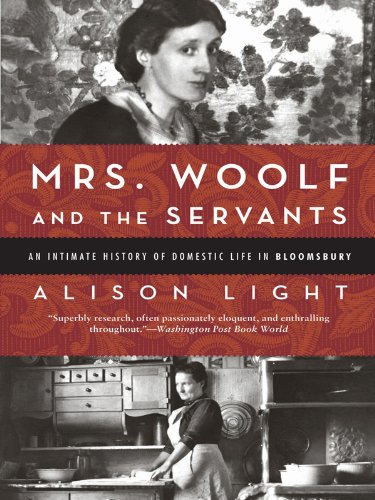
woolfAlison Light’s beautifully researched Mrs. Woolf and the Servants: An Intimate History of Domestic Life in Bloomsbury (2010, Kindle $3.03) highlights the complexities of Woolf’s “servant problem,” which could also be viewed as an intimacy problem. Women of Woolf’s class simply had to have a live-in female servant in the house to do the cooking and cleaning—it was expected, and servants were cheap and didn’t ask for much. But the live-in nature of the relationship posed problems for someone like Woolf, who wanted to be taken care of, but didn’t want to have to cater to the needs of a female domestic on a daily basis.

Light frames her book chronologically, starting with the Stephen family’s oldest servant, Sophie Farrell, who was a country girl in her early 20s hired as the cook when Virginia Stephen was a baby. Sophie became the warm heart of 22 Hyde Park Gate, a home which saw its fair share of trauma, grief and emotional repression, especially after Virginia’s mother, Julia, died in 1895. Woolf always kept up an affectionate correspondence with Sophie, even though she was eventually dropped by Bloomsbury when she got too old and drifted over to the Duckworth side of the family, who were (ironically) more loyal and decent to their dependents.

Light pinpoints the disturbing truth that Vanessa and Virginia, “modern” and progressive as they were, treated their servants shoddily in the sense of “taking care” of them. On the flip side, their servants rewarded them with loyalty and seemed to care about their employers’ welfare. There is an eye-opening photo of Lottie, Nellie and Grace with Angelica Bell in the 1920s—servants who worked for both Virginia and Vanessa (and were sometimes exchanged between them). Their faces are warm and frank; they’re youthful and smiling. Meanwhile Vanessa and Virginia are exchanging spiteful and whining letters about how exhausting it is to have the servants around, how demanding they are, what a burden, etc, etc. These were the women who literally had to empty their slop pails. I learned much about “earth closets” and water closets from this book, since both Virginia and Vanessa had ramshackle country houses with very few modern conveniences (no indoor toilets!). The servants simply had to deal with it.

Indeed, Virginia couldn’t wait to drop Nellie, her cook of 18 years, whose name she always misspelled. Light dwells on this fractured and troubled relationship for a large part of the book. Nellie was a young girl who had lost her mother early, the same as Woolf had. She arrived in 1916, as Woolf was recovering from a serious breakdown and before she had become famous as a writer. She was blonde and rather ladylike, though we wouldn’t know that from Woolf’s description. The relationship started well, but devolved into a pattern where Nellie asked for perfectly reasonable raises, the Woolfs refused, and then Nellie would threaten to give her notice but ultimately revoke it. It was clearly her only weapon. And money was a serious issue: servants had to depend on the generosity of their employers for financial security and were given no state pensions till later in the century.

Woolf seems to have felt a sexual jealousy of Nellie that she never quite admitted to in her diaries, but after Nellie left the Woolfs she told people that Leonard Woolf had been after her sexually. While Light doesn’t think this likely, I think it fits very well with the sexually starved relationship that Leonard and Virginia had. If her husband lusted after Nellie, even without doing anything, the hypersensitive Woolf would have noticed. And from the way Light describes both of the Woolfs’ attitude to the servants, Leonard would probably not have seen Nellie as a “woman” anyway. (He told his lover Trekkie Parsons that he had never been with another woman because the shock of it might have sent Virginia mad.)

Light brilliantly demonstrates that Virginia saw working-class women as representing the degrading female body that she so often craved to transcend. She was often repulsed by them. She also disliked their “petty” minds, so stuck in the present day. And as she descended into bouts of mental illness, she always became more obsessive about it.

Light’s research shows that the servants were actually more “whole” individuals than Vanessa and Virginia. Nellie and Lottie ended up living together in a nice little house for the rest of their lives (the money for it came not from the cheapskate Woolfs, but from her subsequent employers, Charles Laughton and his wife); even Sophie Farrell outlived Virginia (if only by a few weeks) and sent the most touching letter of condolence to Leonard after her suicide. It seems that the servants were able to thrive, given the sometimes desperate economic situations they were faced with.

Although this book calls Woolf to account for her hypocrisies and failures, Light tries to be as fair as possible, given her empathetic bias toward the servants. In fact, for much of the book we’re inside the frazzled mind of Virginia Woolf as she struggles to maintain equilibrium and control. And that, for Woolf fans like myself, is a pleasure—even though I came away with the sad feeling that Woolf’s feminism was only skin-deep, or rather did not extend to the “lower orders,” whom she truly viewed as lacking humanity. But Light returns humanity to these decent women while never in the least indulging in nostalgia about what it meant to be an uneducated female domestic in the first half of the twentieth century in Britain.


Posted in Reviews, Writing | Tagged , , , , , , , , , , , | Leave a comment

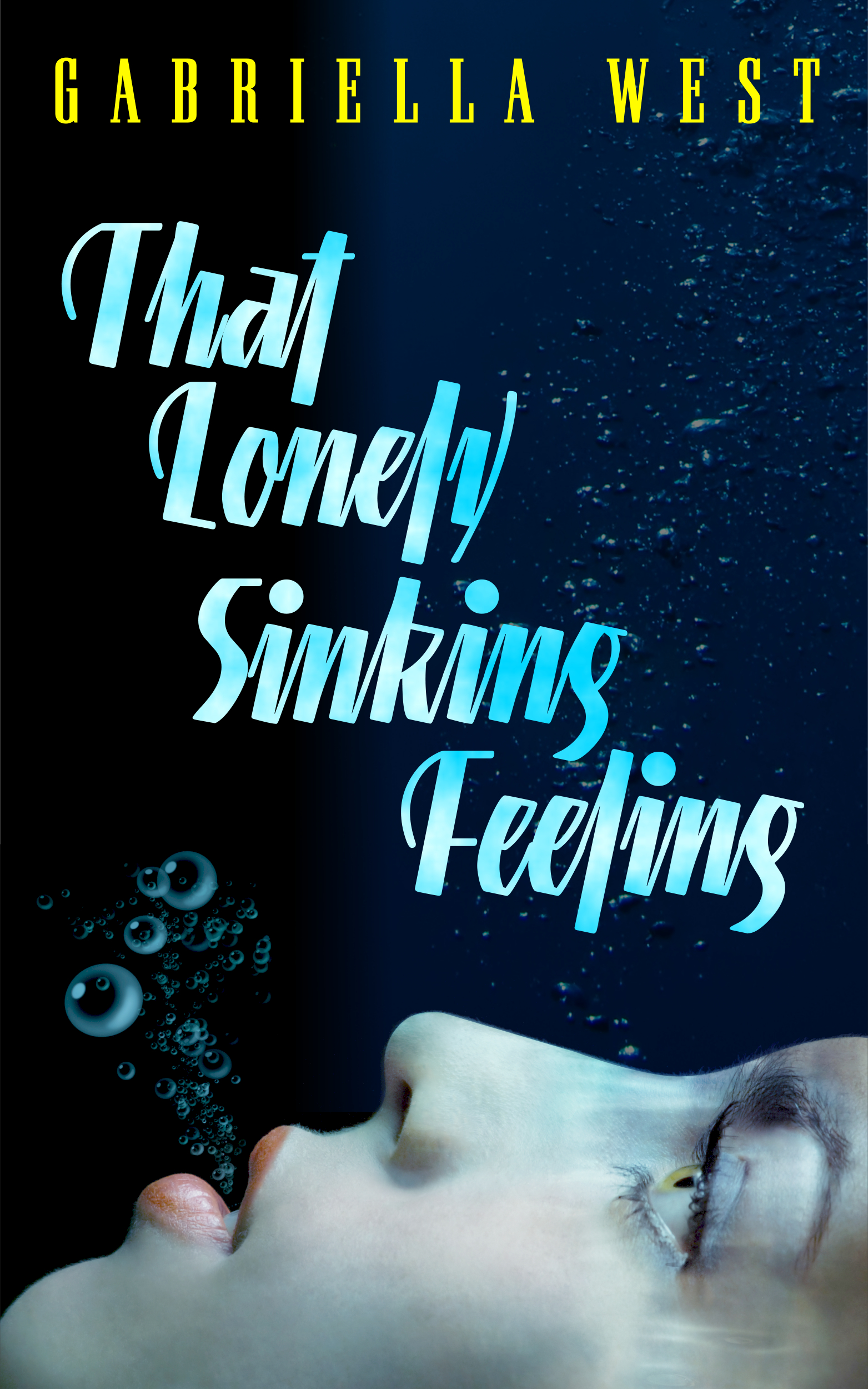
That Lonely, Sinking Feeling

When I look back on my life here in San Francisco I am amazed at all the changes the city has been through and that I have been through in the city. Somehow it seems hard to separate my emotional life from “where I was” in the city. For example, the city that I first moved to in 1988 seems, in my memory, sun-dappled, empty, relatively friendly and relaxed. I found it beautiful. It was filled with baby boomers, then, who were in their thirties and forties. They seemed worldly, yet curious, kind. I was a writer and I instinctively kept myself separate from people, but I managed to find a good writing group filled with fellow grad students from San Francisco State. So I had that, even though at 21 I was the youngest there.

Then came the Loma Prieta earthquake, which I experienced alone in the dingy one-bedroom apartment I was subletting in an old building in the Western Addition. I remember the building creaking noisily as it swayed—a terrifying sound I hope to never hear again.

I moved around restlessly in those first few years, trying to find the right housing situation. I had very little stuff yet, although I was busy amassing books. I could have chosen to do anything or go anywhere once my writing program was done, but instead I got deeper and deeper enmeshed in the city. An older friend had managed to buy a house in what was then a cheap neighborhood, Bernal Heights, and I put down roots in her yard, renting a modest cabin there that I eventually realized was an earthquake shack left over from 1906! I also found my first real job at a university, USF, in the School of Education. I stayed for five years.

In those early years I would have said that I loved San Francisco. And yet I have come to realize as I’ve gotten older that it is really impossible to put down roots in this city. Maybe it is just impossible for me, though the hordes of people I’ve known who’ve moved out of the city seem to illustrate the point. They move for economic reasons, most of them, but also to find a better space for themselves, to open up their lives.

In the spring of 1993, 20 years ago in fact, I was ripe for something or some new experience… I had a steady job and a fairly steady living situation, after all. But what I found that spring would lead me to experience the opposite of permanence and security: the highs and wretchedness of unrequited love. In the very same month I met a young woman, who mentioned casually that she was in a relationship with a man … but they didn’t live together, she reassured me. We bonded like crazy. Then too, at a party that same month, I met a young straight couple who’d just moved to the city from the Midwest. We bonded enthusiastically as well.

That Lonely Sinking Feeling - High ResThere is probably much more to be written about these experiences, though they have informed my writing ever since, but my short memoir piece That Lonely, Sinking Feeling: A Memoir of Love, Friendship, and Letting Go was my first stab at it, the story of what happened in my friendship with “the couple.” I published it on Amazon just before the New Year, 2013. It will have its free promotion on Sunday, March 24, and Monday, March 25. Since I am slowly easing out of the KDP Select program on Amazon, this will likely be the last free promo for this piece.

Two fellow writers have perceptively reviewed it. Shannon Yarbrough enjoyed the dangerous, addictive aspect of the piece, though he wanted more, writing: “West treats us to the intensity and danger of such relationships like in Ira Levin’s ‘A Kiss Before Dying’ while also echoing the themes of a ménage à trois as Patricia Highsmith did in ‘The Talented Mr. Ripley.’ The narrator even becomes a bit intense and fanatical as Ripley did, and that’s what kept me reading. I wanted the trio pushed to the edge, but instead we only see the narrator ‘letting go’ as the title states.”

Gina Genovese wrote: “No one has the ability to express her characters’ fears and desires like West. … In ‘That Lonely, Sinking Feeling: A Memoir of Love, Friendship, and Letting Go,’ I found myself wincing at the painful accuracy in which she reveals her characters’ motives. Of course it’s this same painful accuracy that makes her writing so beautiful. It felt honest, and I believed her. … West’s writing, at its best, offers a respite from the very separateness she writes about. Through her honesty (and the inherent vulnerability honesty requires) she reminds us that we’re all in it together.”

Looking back, I believe that my whole strange journey here in S.F. has been a lesson in over-attachment and letting go. Of course we have to learn through raw experience and later, if we’re lucky, we can understand the patterns. I’m grateful to have avoided the really worst mistakes, the ones you can never walk away from. And yes, I’ve learned the “we’re all in it together” lesson as well.


Posted in Personal, Writing | Tagged , , , , , , , , | Leave a comment

Marking St. Patrick’s

As I mentioned in a previous post on this blog, I don’t ever do much for St. Patrick’s, but I usually find myself in a celebratory mood anyway because of the coming of spring. The fruit trees are blossoming madly in our backyard (so much so that it looks like a wedding!), and there are even a couple of Calla lilies poking their creamy heads up. The sun is out, and everything seems a little lighter and happier.

Celebrate the Irish in Ewe, image copyright Sandra Boynton

Celebrate the Irish in Ewe!
image copyright Sandra Boynton

I did come across this lovely image on Twitter by illustrator Sandra Boynton yesterday, and I thought I’d share it!

I decided it was a good day to republish The Leaving on Smashwords. It should soon be available again on Barnes and Noble, Apple, Sony, Kobo, etc. It’s hard to believe that it will soon be almost two years since I originally published it on Smashwords. It’s my most authentically Irish novel, begun just a year after I left Ireland at the tail-end of the 1980s. There’s very little that’s sentimental in the book, but it has spoken to some people who had similar complicated adolescences, and for that I’m very glad.

Posted in Personal, Writing | Tagged , , , | Leave a comment

2012 in review

The WordPress.com stats helper monkeys prepared a 2012 annual report for this blog. As a bit of a giggle, I’m posting it for all to see. For a blog that I didn’t tend as often as I should this year, 1900 views ain’t bad… And what really struck me were where the visitors came from. Fourteen from Iceland?? Congrats to J.K. Rowling, Clare Ashton and Kate Genet—reviews of their books gathered the most views 🙂

Most importantly, Happy New Year to all my blog’s readers!

Here’s an excerpt:

600 people reached the top of Mt. Everest in 2012. This blog got about 1,900 views in 2012. If every person who reached the top of Mt. Everest viewed this blog, it would have taken 3 years to get that many views.


Posted in Reviews | Tagged , , , , , , , | Leave a comment