This Writing Life: Two Opinion Pieces

Turns out Cervantes ended up a pauper.

Turns out Cervantes ended up a pauper.

I was listening to the radio in the kitchen the other day, and the NPR announcer was talking about the search for the bones of the great Spanish writer Miguel de Cervantes, author of Don Quixote.

Cervantes is very famous now, of course, but the reason why they were searching for him, the announcer went on, is because he died a pauper and was buried in an unmarked grave.

I stood at the stove and laughed at the absurdity of it: that this famous writer, thought by some to be the father of the novel, died a pauper and was buried in an unmarked grave.

But are writers today doing any better? The writing life has grown to be economically unviable, and a recent piece in Salon.com (http://bit.ly/1zyGUlV) underlines this. Ann Bauer writes about being financially “sponsored” by her husband and the difference this makes in terms of energy and time to write. She has seen both sides, since she struggled in the past with work, raising kids, and a divorce. Needless to say, she barely wrote anything at that time in her life.

Bauer’s bigger point, which is hard to hear, is that most writers who are successful today have family money, connections, or are subsidized by their spouses. I can’t dispute Bauer’s point, although some indie writers seem to have a slightly easier go of it. Read the comments for some fascinating stories.

What is the importance of home for a writer? Besides facing money issues, writers often feel adrift in their surroundings. I wrote a guest post over on Shannon Yarbrough’s blog called “The Dislocated Writer.” It addresses some of the problems of living in an expensive, changed city that I no longer feel connected to, a place where I once felt very much at home.

Check it out:

Write or Wrong Part 9: Where author Gabriella West feels out of place…

UPDATE: Cervantes’ bones (or bone fragments, all that is left of him and his wife) have been found under a Madrid convent: 

http://www.telegraph.co.uk/news/worldnews/europe/spain/11477947/Don-Quixote-author-Miguel-de-Cervantes-tomb-found-in-Spain.html

Posted in creativity and its discontents, Personal, Writing | Tagged , , , , , , , , , | Leave a comment

Write or Wrong Part 7: Melinda Clayton can breathe just fine, thank you…

It’s been such a quiet January, so I wanted to kick things off here by reblogging one of the Write or Wrong posts on writer Shannon Yarbrough’s site. Write or Wrong is an excellent series where contemporary writers speak candidly about their writing process. My own guest post in this series is scheduled for this coming Thursday! (And it won’t be about process because for some silly reason I can’t write about that…)

Posted in creativity and its discontents, Writing | Tagged , , | Leave a comment

2014 in review

The WordPress.com stats helper monkeys prepared a 2014 annual report for this blog.

Here’s an excerpt:

A San Francisco cable car holds 60 people. This blog was viewed about 2,200 times in 2014. If it were a cable car, it would take about 37 trips to carry that many people.

Views are up from last year. Thanks, readers!

Posted in Writing | Tagged , , | Leave a comment

Here’s how Seth Rogen and James Franco responded to today’s release of ‘The Interview’

Sony gave everybody a belated Merry Christmas by releasing ‘The Interview’ to a couple hundred independent theaters and widely online. Now hopefully Comcast will step up to the plate as well. They should.

Happy Holidays, everyone!

Posted in News | Tagged , , , , , , | Leave a comment

You Can’t See The Interview, But I Did

Just bizarre! Since the new James Franco-Seth Rogen movie The Interview has been CANCELED—which I find outrageous—due to North Korea’s breathing down the neck of the studio, Sony, here is at least a review of the movie from “Time.” What a crazy year it’s been…

Posted in creativity and its discontents, Reviews | Tagged , , , , , | 2 Comments

Review: The Goldfinch

Donna Tartt's third novel got critics and readers talking.

Donna Tartt’s third novel got critics and readers talking.

Ah, The Goldfinch…

This has to be one of the books I waited the longest to read. Got it on my Kindle when it first came out, was a bit put off by the hype, started plowing into the initial museum-explosion section (where 13-year-old New Yorker Theo Decker is trapped in the Met after a bombing that kills his beloved mother and takes off with the titular painting), found myself very bored, found the writing pretentious. Stopped reading, dismayed.

And then I went back recently, picked it up again and found, to my surprise… that once Theo moved in with his school chum Andy and the wealthy Barbour family, the writing perked up, the book gripped me, and I swept through the rest of it as fast as I could. I was particularly taken by the Las Vegas section where Theo is dragged off to live by his scoundrel of a father, who gambles for a living, and takes up with a young Ukrainian/Australian, Boris, who is even more rootless and unparented than Theo himself. Theo and Boris take lots of drugs, steal for kicks, they experiment sexually… Donna Tartt’s writing here is superb, showing the boy’s world opening up rather than shutting down.

But back in claustrophobic New York, torn away from Boris by his father’s timely, or untimely, death, depending on how you look at it, Theo hits a bit of a slump that seems like it will last the rest of the novel. Still taking plenty of prescription drugs, he ends up as a salesman of antiques in Greenwich Village, some of them fakes, while his virtuous partner Hobie, a reassuring father figure, restores antiques in the back of the shop.

Unlike many of the reviewers on Amazon, who loved the first, “arty” section of the book, and hated the philosophical, open-ended ending and the scenes in Amsterdam, I found that Tartt exploded her own pretensions by driving a bus through her own literary novel. Theo’s carefully constructed world “explodes” again at the end, and we’re led to believe that at least he is taking his life in his hands…somewhat. (Mostly by not killing himself, ironically.) But what would have really pleased me would have been a recontinuation of the relationship with Boris. These are two characters who seem to want to be together, no matter how much their author wants to dub them as straight, on different tracks, etc.

To sum up, I’m very glad I read The Goldfinch! It’s a nineteenth-century novel at heart; it luxuriates in its own length. Theo’s “bad” friend Boris ends up giving him closure on the biggest wound of his life outside of his mother’s death, his ownership of the famous painting, which has become a terrible burden. Once he realizes that he hasn’t even had the painting in his possession for years—a delicious twist that Tartt pulls off well—Theo’s life begins to change.

And for a book that says over and over again that people can’t change, Tartt does offer a little smidgen of hope for Theo. But it IS a long, dark and sad book, no doubt. Those who have suffered loss and who have PTSD (and Tartt does not shy away from labeling Theo this way) will understand and appreciate the bleakness. Theo’s female love interests are flimsy and brittle. Without the tragicomic character of Boris to the rescue, then, this book would have been a terrible slog. Luckily, Tartt allows that relationship to become central, and, to my mind, it saves the novel.

The Goldfinch is still available on Kindle for a very reasonable $6.99. though I wouldn’t mind also owning a copy of the physical book now.

For more information about how critics are divided on The Goldfinch’s literary merit, I found a Vanity Fair article here (followed by thought-provoking comments).

http://www.vanityfair.com/culture/2014/07/goldfinch-donna-tartt-literary-criticism

Posted in Reviews | Tagged , , , , , , , , , , , , , , | 2 Comments

The Amazing Life of Daniel Defoe

A fascinating piece about Daniel Defoe…who was actually pilloried at one point in his long and tumultuous life. Just reading the list of his pen names gives a great sense of the man. I’d like to read “Journal of the Plague Year” and “The Storm.” (Sadly, I’ve never found his fiction compelling.)

InterestingLiterature's avatarInteresting Literature

Daniel Defoe has been called the father of the English novel. But what is less well known is the fascinating life he led. It involved more than one brush with death, destructive fires, outbreaks of plague, and many encounters with the authorities. He found himself before the law, in the pillory, with his house falling down around him, with his entire neighbourhood laid waste. His work as a journalist was groundbreaking (no pun intended on his house falling down). And his countless pen names are absurd, hilarious, and revealing.

Imagine a world without Daniel Defoe. To start with, the novel as we know it would be … well, would not be as we know it, without Defoe’s input and influence. Journalism, too, might have been different, if it hadn’t been for Defoe’s pioneering work in that field. But what’s remarkable is that Defoe did exist, and survived – on several…

View original post 1,299 more words

Posted in Writing | 1 Comment

Its Not You, Its MeNovember seems like a good month for a promotion, so with that in mind my recently published memoir It’s Not You, It’s Me will be free for three days starting tomorrow. (Nov. 10–12) And just so it won’t be lonely, my LGBT historical novel Time of Grace will be available for 99 cents on all platforms for a limited time.

New site PeopleReads will be featuring It’s Not You, It’s Me in their freebie spotlight on Nov. 12!

This perceptive 5-star Amazon review expresses exactly what I wanted to achieve with “It’s Not You, It’s Me”:

“It’s Not You, It’s Me” follows the raw, exciting, and painful trajectory of a “wrong” relationship. We’ve all been there.

West slowly and deliberately lets us walk with her down this path, knowing things will end poorly but hoping we are mistaken. All the allure and insecurities of a new relationship are present at the beginning of West’s relationship with Eileen. We nod our heads in agreement as West struggles with nagging doubt. But we second-guess with her as she wonders if it’s just the regular dance of two people revealing their true selves while the projections fall off.

West courageously exposes her own vulnerabilities as we see the synergy of two people who probably shouldn’t be together. It’s an energy that is hard to break and impossible to endure. Yet, as West demonstrates, the end, while painful, has the potential to bring more knowledge of self and more commitment to follow one’s own path. Well done.

Posted on by Gabriella West | Leave a comment

Ebola…Now a Global Crisis

Nasty, isn't it?

Nasty, isn’t it?

I’ve been following the course of the Ebola outbreak with increasing dread. The Ebola virus was discovered in 1976 but never spread outside remote African villages till the latest outbreak in Guinea, Sierra Leone, and Liberia, where the disease is taking a devastating toll right now.

I found this recent interview with one of the scientists who first discovered Ebola back in the ’70s. It’s definitely worth a close read. Fascinating detail: they named the virus after a river near the remote village in Zaire where the first outbreak took place.

Clearly, despite reassuring statements by the CDC, we are not ready for Ebola here in the West, either. Just look at the shabby way the poor nurse’s aide, Teresa Ramos, has been treated in Spain…she had to practically beg for medical treatment and then found out she had Ebola though the media as she lay in her hospital bed. Not to mention her dog being euthanized, an action that seems gratuitously cruel. The case of the first US Ebola patient, Thomas Duncan, was also terribly mishandled. I’m not sure anything could have saved him, but he certainly didn’t get the superb treatment that Dr. Kent Brantly got.

More Ebola cases will crop up in the West, and more mistakes will continue to be made. That’s certain. But the best hope is to stem the outbreak in the African countries involved, which is why I will be making a donation of 3 percent of my editorial income to Medicins Sans Frontieres (Doctors Without Borders) at the end of the month. It’s not much, but at least it’s something.

Update: Teresa Ramos’s condition is possibly improving, according to recent reports—but as of 10/12 one of the nurses treating Thomas Duncan in Dallas has been diagnosed with Ebola.

Posted in Health, Personal | Tagged , , , , , , , | Leave a comment

Singing a Happy iTune

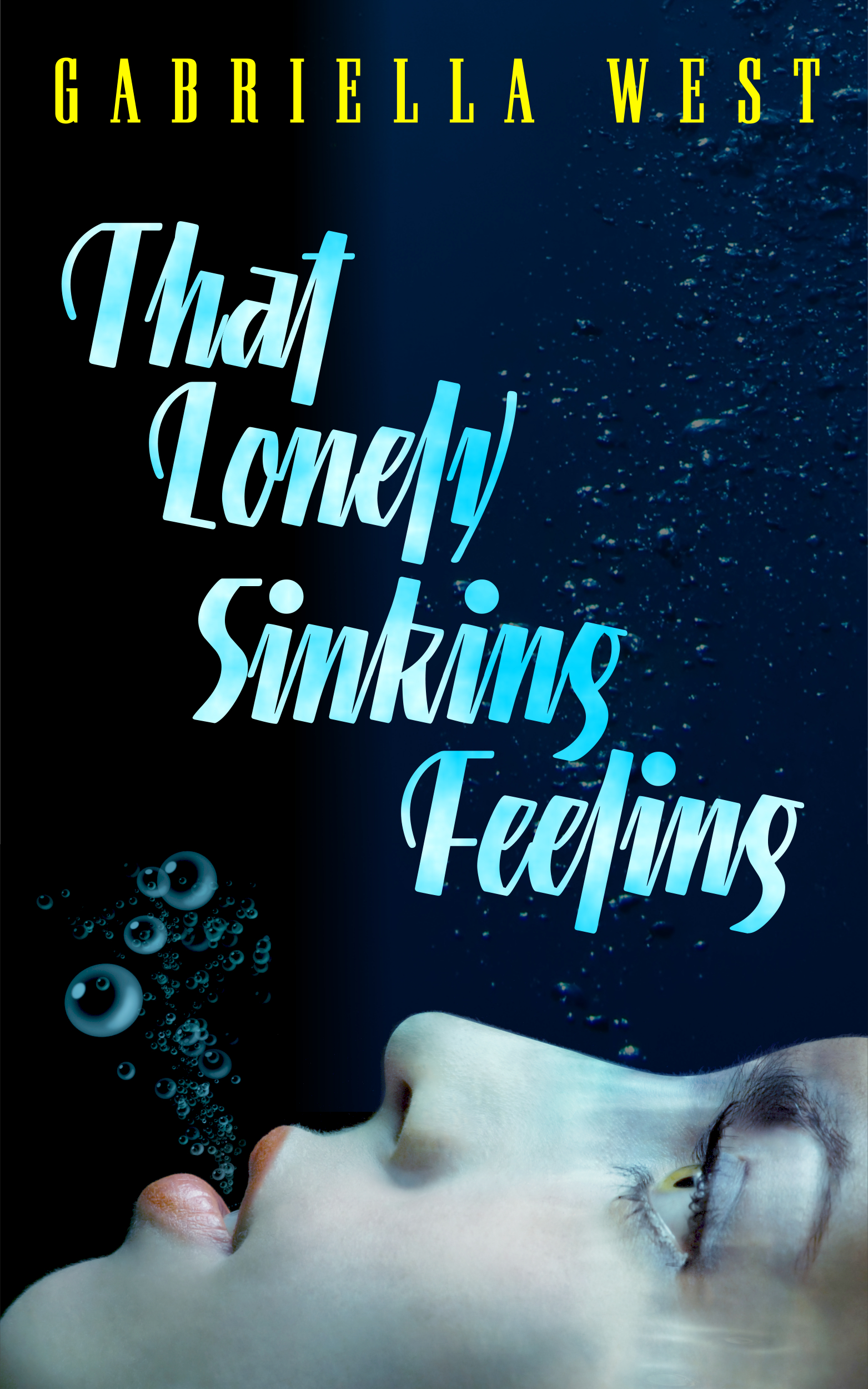
That Lonely Sinking Feeling - High ResTechnology is a funny thing. I’ve always been one to be way behind the curve, and although I have always used Macs at home for working and writing, they are never the fresh and new models but reliable old workhorses. I’ve never used an iPod, don’t own an iPhone. I finally broke down and bought a used iPad, which is the first generation (as far as I can tell), made when Steve Jobs was still alive.

iTunes has always been a bit of a mystery to me, too. I’ve used iTunes occasionally for music, but more often for playing mp3s of dictation files that I’m transcribing. Pretty boring, right? Yeah, but I always resent when the cultural dictum comes down from above: You have to consume your entertainment this way. This is the new and flashy way and everybody’s going to adopt it. Well, I usually don’t!

So I have not yet been able to read my own books on Apple. They’re just there. Maybe that will change soon, because as Mark Coker of Smashwords informed us, iOS 8 is now going to come with an iTunes app built in.  Now, what that will look like, I’m not sure. I don’t have any new devices! But because I know I do have some iTunes readers out there, I set two ebooks free for the foreseeable future. My Dorothy Richardson study is free, as is my short memoir That Lonely, Sinking Feeling: A Memoir of Love, Friendship and Letting Go.

Meanwhile, my latest queer memoir, It’s Not You, It’s Me, is released tomorrow on Kindle! It is part of the Kindle Unlimited program, so it’s free for KU subscribers. I was pleased to see that the Australian Amazon store placed it in their lesbian studies category, along with provocative titles like Shiri Eisner’s Bi: Notes for a Bisexual Revolution, which I am looking forward to reading.

Posted in LGBT, Personal, Self-publishing, Writing | Tagged , , , , , , , , , , , , | Leave a comment