Happy Read an Ebook Week! To help you find a book to celebrate, you can find many of my books at a promotional price of 50% off at @Smashwords from March 3-9. Find my books and many more at https://www.smashwords.com/profile/view/gabriellawest #ebookweek24 #Smashwords
I’m happy to say that I woke up this morning to a few sales, which was a nice surprise. Bargains include A Knight’s Tale: Kenilworth, A Knight’s Tale: Montargis, my lesbian historical Time of Grace, and my contemporary stand-alone, Once You Are Mine, set in West Marin, California, at the time of the pandemic. Once You Are Mine is a special deal at only 99 cents through March 7.
California is still stuck in the winter blues. I plan to do a more personal post soon! But I just wanted to note that it was so sad to lose Flaco, the Eurasian Eagle-Owl, last month. There was a memorial for him in Central Park today, which I’m sure was like a big group hug for all the people who followed Flaco and recorded him with their cameras. Had I been there (unlikely though that is), I would have gone. Rest in peace, Flaco, you were great.
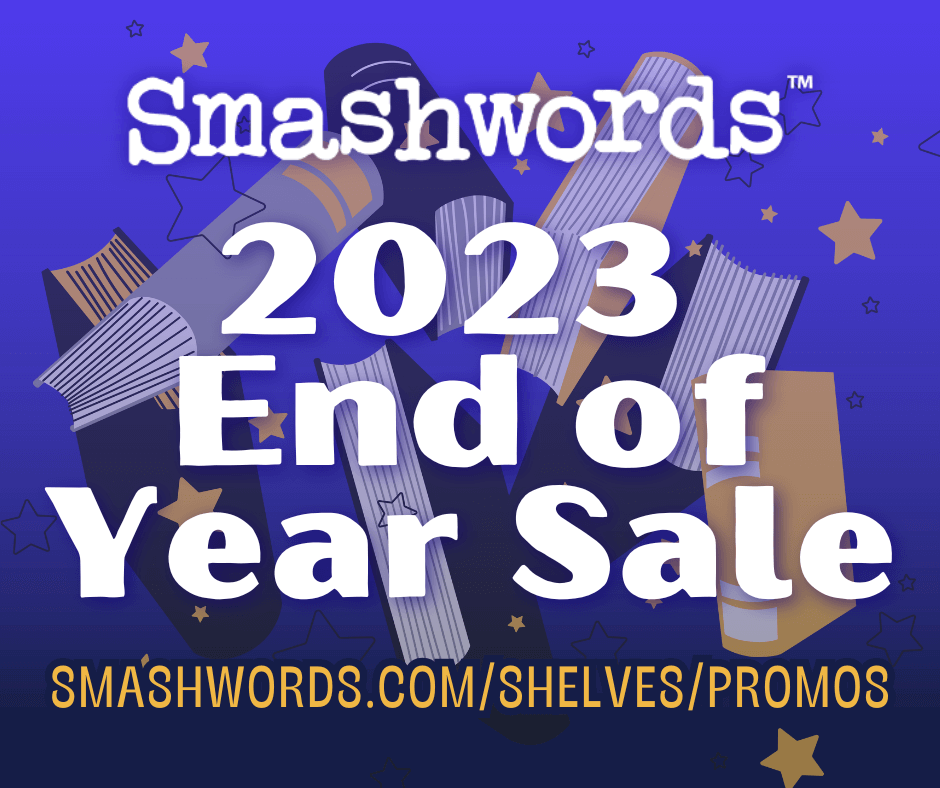
Yep, Christmas is coming up, and so is the Smashwords End of Year Sale! This year all my novels will be 50% off, to keep it simple. Just scroll down from the top of the Profile page to see bargains. The sale runs Dec. 15 thru Jan. 1st.
I haven’t published a book this year and have had to take time away for health reasons. But who knows what 2024 will bring? For one thing, it will bring a bruising U.S. election (sigh).
To all my blog readers, a Merry Christmas and a Happy New Year.
Little did I know when I picked up the second Pogues album, Rum, Sodomy & the Lash, on cassette in the mid-1980s in Dublin that I would one day be watching Shane MacGowan‘s funeral on a livestream from San Francisco in 2023. But so it was. MacGowan, who died on November 30, had been ailing for a long time. I hadn’t realized that he lived in Dublin with his wife, Victoria Clarke. He was being treated at St. Vincent’s; he had been in a wheelchair since a fall in 2015, I learned.
Back in my college days, I liked “Dirty Old Town” best of all on that album and couldn’t really connect with any of the other songs. It turns out “Dirty Old Town” wasn’t even written by Shane, but it evoked Dublin so well. “Dreamed a dream by the old canal…” There was a tenderness to it that contrasted oddly with Shane’s jarring appearance. Even as I watch the video now, his teeth look particularly grotesque and he seems slightly nervous and out of it.
When his wife posted a recent photo of him in his hospital bed, I knew he didn’t have long. And that was a shock. But he was smiling gamely, as he always did in later photos. I see the sweetness and brilliance in him now.
After Sinead O’Connor died earlier this year, I was looking back at clips of her performing, and one of the later ones she did, on RTE television, was a rendition of “A Rainy Night in Soho.” This happens to be my favorite Pogues song and I am pleased to see that it now stands as one of his best. Shane was a romantic and when I look back at his work, I hear courage in every line he sang. Just the way he boldly proclaims, “I’ve been loving you a long time…” Another fantastic line from the song that I love is “The wind was whistling all its charms.” Very Shane.
His funeral took place on what would have been O’Connor’s 57th birthday. Fate wove their lives together somehow, and of course they must have had many private moments that no one will ever know about. She died in London; he died in Ireland. His funeral was a much grander occasion. The President of Ireland sat in the front row! TV channels in England and Ireland streamed the service. I tuned in via Twitter at 7am (!) to watch for what turned out to be three hours, still rather amazed that I could. It was mind-blowing for me on a number of levels. Although held in a Catholic church, the funeral was a pantheistic experience. The music was intensely powerful. Looking at Shane’s wicker coffin, adorned with red roses, was very poignant.
Once, on a Friday evening in the late eighties, at the end of a long week at college and near the end of my time in Ireland, I stood on the main street of Bray waiting for a bus to take me to Newcastle, which was the tiny village in Wicklow where my family had moved in 1983. I could have taken a bus the whole way from Dublin, but sometimes I preferred to take the DART train and look out at the peaceful coastline on the way there. Bray was the last stop then, so I would hop on the 84 there and it was a quick 20-minute ride home after that.
I wish I could remember the season. It must have been spring or early summer because there was a young couple in their late teens sitting on the street at the bus stop with duffle bags, very relaxed. They smiled at me. It was unusual, to say the least. We got to talking, slowly. “We’ve been to London,” the man said. Then, later, he suddenly started singing “Dirty Old Town” as the day dimmed slightly. I remember smiling to myself.
It was a perfect moment, one of those rare moments when I was comfortable in my own skin and in sync with a pair of strangers. Now I realize they must have been at a Pogues gig in London. Why did I never want to go to one? I never thought about it. But when I visited an old friend in London in ’86 I picked up the Poguetry in Motion EP and heard “A Rainy Night in Soho.” And I still have it. Since nobody talked about it then (and it never became a hit), it seemed like a song just for me. And it still does.
Shane left a beautiful legacy: his art. A duet Shane penned that I never even knew about in the 1990s, “Haunted,” has been a wonderful solace to listen to recently. Both Sinead and Shane are brilliant on it, her emoting with such quiet focus, his voice sprawling and expressive. Music is medicine for the soul. And I think they both knew that.
Camille O’Sullivan and Mundy sang it at the funeral. It was my favorite performance.
And the eulogies: his sister Siobhan and his wife getting equal time to remember him, both in very different ways. No men spoke at length except the priest, who delivered an eccentric homily where he reminisced about listening to “Lizzy” as a youth. It seemed like everyone was looking back at the past, reexamining their identity. How strange to see Gerry Adams get up to speak first… surreal for me. And such a reckoning with time to see my generation age. Glen Hansard, younger than me, now a bearded patriarch!
But it’s all good, as they say, even though it did have a kind of “last stop” quality. And that’s appropriate, too.
Dearest Sister Wendy: A Surprising Story of Faith and Friendship, Orbis, 2022, $24.99 paperback; $16.99 on Kindle
A collection of letters between a religious publisher in upstate New York and a cloistered nun in Norfolk, England, has enraptured me. I knew nothing about Robert Ellsberg before I picked up Dearest Sister Wendy. Sister Wendy, though, was a favorite of mine for a time in the ’90s because of her art program on PBS, and I have one of her books, but haven’t looked at it for an age. This book was like going back in time to “catch up,” but the most beautiful thing about it is how contemporary it is (the majority of letters are exchanged from about 2016-2018). Ellsberg comes across extremely well, as a kind, earnest, and humble man, a devout Catholic but never a bore. Early on, he says to her, “I realize that my writing to you is a form of prayer.” He recounts his dreams. She’s fascinated. It’s such a balanced book, as *he* is equally fascinated by her! Late in the book, she writes, “I am certain that the blessed one in our correspondence is instead me.”
Such thought and caring went into these letters. These two people expanded each other’s worlds. Of course, at times it seems like a mother-son type of relationship has sprung up between them (Sister Wendy was just slightly older than Robert’s father, Daniel, of Pentagon Papers fame). There is a distinct tenderness and mutual support that is totally authentic. For Sister Wendy at least, who went into the convent at age sixteen, this must have been a unique experience, and it’s very interesting that she allowed the correspondence to take up so much of her later life. Ellsberg never takes it for granted and keeps thanking her, sending her books. A symbiotic bond springs up. And eventually, they do meet.
One thing that struck me as astonishing is that Ellsberg talks constantly about his projects at the religious press Orbis, where he is editor-in-chief, but I didn’t get any indication that he was overworking. But Sister Wendy knew! She keeps asking anxiously about his health and telling him not to overwork. And sure enough, he begins to have heart problems, starts doing tests, and actually dies briefly during an angiogram procedure. Sister Wendy herself is slowly declining throughout, which gives the book a particular melancholy beauty. Everyone comes off well here and Sister Wendy’s sly wit is delightful. I hope Pope Francis, whom they both revere in a slightly obsessive way, had a chance to read it.
I requested this book for the San Francisco Public Library and they duly went ahead and purchased it, so I hope many people enjoy it as time goes by. It is timeless.
I managed to download the emblem of Charles III’s coronation, which turns out to have been designed by Jony Ive, once head of design at Apple and now Sir Jony Ive 🙂 The emblem itself is very pretty.
CNN may regret its choice to screen the Coronation, as it turns out that royalty are really rather unpopular now in the U.S. And Charles and Camilla are a smug, unappetizing couple, to be sure. I will still watch, though, because there’s something about these events that pulls at you. I remember when my mother was dying in Ireland, almost twenty-one years ago, she tried to get me to watch the funeral of the Queen Mother (!), which she had taped for me a couple of months before, knowing I would be coming to visit. I couldn’t do it because my mother’s own death was imminent and something about watching a grandiose funeral was absolutely repulsive. But I remember my mother saying, “It was perfect.” I think she must have watched it intently, sensing her own time would be up soon. She was certainly someone who was moved by beautiful words and music. I suppose, no matter how flawed the royals are as people, watching them go through these elaborate ceremonies brings us close to the divine.
Karla Huebner’s latest book seems as if it’s the story of a friendship between two women during the harrowing Trump years. Superficially, it is, but it soon becomes clear that it’s a thinly veiled autobiographical novel about the anxieties of middle age. Because the Trump years were so difficult for many of us, especially women, the framing of the novel prevents it from being too self-indulgent—and since the demonic fellow is still bedeviling us with his presence, it doesn’t seem “dated.”
Huebner’s wonderfully named main character, Jacobine Flaa, is a professor of immigration studies at an unnamed university in Ohio. Nearing sixty, she lives by herself in a small house and has enough money and time to pursue leisure activities. Her life is spare, though, and she relies on an equally unhappy and emotionally unavailable friend, Cinda, for any kind of regular companionship. Both women have links to the West Coast, but have been priced out. Cinda is eccentric and unreliable, but makes for a good foil against the sometimes flat affect of Jacobine.
Are the women even fond of each other at all? I found no sense of the arc of their friendship, whether they liked each other much more at the beginning, so I presume that this isn’t the point. As Jacobine thinks about dropping her after continued let-downs, another character ends up supplying the key to Cinda’s character with empathy and insight: “It must be so hard to go through life like that, constantly repressing your pain when you fail at something. Covering it all with endless trivial chit-chat.”
There was a poignancy and strangeness about the book for me, I confess, as I have known Huebner for decades. She was in a longtime Bay Area writing group that I was a member of. I was “cast out” of the group about twenty years ago due to a personal conflict with another member. Huebner, by then phoning in from the East Coast, was the only person who lobbied for me to stay.
Imagine my feelings, then, when the early part of the book covers the death of a mutual friend who co-founded the writing group, someone I deeply cared about. Names have been changed; all is thinly veiled. But, given this, it is hard for me to see any of this book as fiction, exactly, even more so as it bumbles to a close with absolutely no resolution, although a sixtieth birthday and an evening with an ex that ends in bed breaks a long stretch of celibacy for Jacobine. Trump is still president; Jacobine’s life is still hard.
Even though Jacobine is politically engaged, her lack of self-awareness about herself and her friendships pervades the book, because her friendships are awfully transactional and her constant default reaction is judgment. However, the need to keep reaching out is there too. We do need others around us as we age, however weak the connections are. I found myself musing that if I had gotten together with Huebner on one of her visits to the Bay Area, I might have found myself in the book! It was a slightly unsettling feeling, to say the least.
However humdrum the book may seem at times, it’s not boring. Huebner is incapable of writing a bad book, but this one has the feel of a suppressed cri de coeur. The jury is out on Jacobine’s health as the book ends, on her relationship with Cinda as well. Did Cinda even exist? I would prefer to think she is a fictional character, actually. More likely she is a composite of several people. The times when Jacobine takes to her bed, riddled with stress at current events or grief at the loss of a friend, are the moments when she is most likeable. (Her body, at least, seems to know that something is amiss in her life.) The book does not even touch on the pandemic. It ends before that. We can rest assured that Jacobine will continue to put one foot in front of the other.
At any rate, ironically, there is a huge audience for this book. Contrast this to Huebner’s previous novel, In Search of the Magic Theater(2022), if you want to get a sense of her range.
As promised, I’m posting a personal essay written in 2021 during lockdown, shortly after I got the vaccine, which seemed so, so significant at the time. I realize that it is about time, hope, and gratitude.
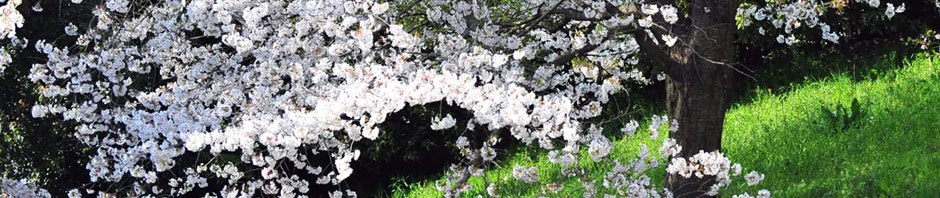
[Image is of a flowering cherry tree on the USF campus that I found on Yelp, taken around the time of the trip.]
I finally got the vaccine toward the end of March 2021. When the statewide MyTurn site opened up, I assumed I would be making an appointment for myself online at one of the mass vaccination sites, but it didn’t happen the way I thought it would. I made a “ghost” appointment at a local Walgreens in the southwest part of San Francisco, turned up at the appointed time, and was promptly turned away because my name didn’t appear in the system. It was a glitch, the female pharmacist said without much sympathy. A stressed-out young Indian American woman ahead of me in line was kind enough to tell me that she had an appointment for the same time I had made mine. It helped me to know that someone else had gotten “my” appointment. I bowed out, but shared this frustrating story on a Facebook group dedicated to people seeking vaccine slots in S.F.
Somebody saw my post, and with the lightning-speed with which things happen in America (as opposed to the glacially slow rollout in Ireland, where I grew up), a kind woman I didn’t know suddenly messaged me and told me about a UCSF pop-up community clinic in the Western Addition, at the Third Baptist Church on McAllister Street. I could get Johnson & Johnson there, I learned, and this was what I was hoping for, fearing the harsh side effects of the other two. But I still hesitated. I’d lived in that area over thirty years ago, when I first came to S.F. It had been a dodgy neighborhood then, and I hadn’t been back for many years. Was this a foolish thing to do, trekking across the city when I could make a nice, safe appointment online someplace close to me? In fact, I had also snagged a back-up appointment at S.F. State for a Pfizer shot, but something made me push forward with the pop-up.
Turned out it was all for the best! On Sunday morning I hopped on a bus in my neighborhood near S.F. State, then caught another bus going north down 19th Avenue to Park Presidio, and then the 5-Fulton, which I remembered as an incredibly slow bus in 1988, when I had lived in a shared house in the Inner Richmond for a few months before moving to the Western Addition. I had often walked about ten blocks to Park Presidio back then to get the bus to S.F. State because the 5-Fulton was so slow. Well now, here I was again, standing at the side of the road on Fulton Street, on a nice grassy verge actually, glancing up at tall Douglas firs, waiting for twenty-five painful minutes for the bus to come. One finally came trundling along; but to the dismay of myself and the exhausted-looking Indian man standing at the bus shelter, the driver slowly waved a sheet of paper at us marked “Drop-Off Only” as he approached. It was surreal… but I hoped it meant another bus was coming. And another bus did come after another watching-paint-dry ten minutes. The Indian man, myself, and a nice gay boy who told me he studied at University of San Francisco hopped on.
It took ages to get to my destination, which was less than a mile away. Absolutely ages. But I was relaxed, to my amazement. At least I was on my way. I was nearly there. I watched out the window as the bus crept east along Fulton in a lethargic crawl. We passed the pale cream stone facade of U.S.F., closed up for the semester, I assumed. I had worked there for five years in the 1990s, my longest job ever, but up on Lone Mountain and then in the former Presentation Convent on Turk Street. As the bus moseyed along, I reflected that my friend Denise had lived on Fulton near U.S.F. for a time. We’d carpooled together to school at S.F. State a few times. That had been nice for me, although Denise drove wildly. Once she drove us onto the median on 19th Avenue, I remembered. We’d met in a Memoir class my first semester of grad school, and she invited me to join the writing group that she and a few others started up in 1989. That group lasted more than ten years, during which time I wrote two novels, and published one.
They were all older than me. Denise is long gone, a Spanish linguistics professor now in far-off Chico, a tenuous Facebook connection only, whom I always expect to disappear one day. (A few months after writing this essay, I was horrified to learn from an obituary posted to her Facebook page that she had died of breast cancer.) Betty, the dynamic red-haired teacher from the South Side of Chicago who started the group with Denise, and a good friend of mine for many years, died of lung cancer a few years back. In fact, of that group, I am the only one who still lives in S.F. Two of the group have left California. And two are now dead.
At this time in my life, I am more aware of patterns, of the way life tends to be lived in thirty-year cycles. I’ve been in San Francisco so long that it seems impossible to leave. And there are some days when S.F. reinvents itself, shows a sudden bright beauty, so that you wonder why you ever wanted to go. It’s particularly that way in early spring, I have found. And in San Francisco, spring always comes early.
The bus trundled along McAllister, a street I’d never spent much time on, but I’d lived only a few blocks from here on Scott Street at the time of the Loma Prieta earthquake in ‘89. The beautiful old, colorful Victorians on McAllister towered over me gravely as I waited in the parking lot of the church. It was an odd modern building on a corner; presumably its facade looked more churchlike, but I was facing the other way. I didn’t even know if I’d be let in—I had never received proper confirmation—but I’d brought a printout with me of the registration form I’d filled out. Somehow, I’d acted quickly enough and I was in the UCSF system. I was waved through to a basement reception room, answered a few questions that a Latina with an iPad asked me, showed my I.D., and was soon waiting for my turn in a smaller room, sitting down in a little partitioned space where I found myself staring at a row of old gray hymnals on a metal shelf.
The solid hardbound hymnals grounded me. What could go wrong? I thought, and in fact nothing did. First, a slim Asian American woman from the fire department stood in front of me in her uniform, checking politely to be sure I was not likely to have an allergic reaction. A nice African American woman gave me the jab on my left arm. I felt the brief chill of the vaccine, which reassured me, actually: something had happened. “One and done,” she said cheerfully, a line I was sure she said to everyone, but it landed well. I was handed a vaccine card and a sticker. I waited as instructed for a little while, to make sure I was not going to pass out, in an area in the main room near a shabby old piano. I saw a nameplate for a dance school on a closed door. Everything was reassuringly ordinary. People were warm, kind, but not overbearing. And somehow it all worked. I stepped away, feeling light.
I felt relieved, grateful. I said so on the survey form they gave me before I left. But what I couldn’t quite articulate was that I knew that I was privileged to get that shot. I’m early fifties, well under the eligible age of sixty-five at the time. It’s true my high BMI made me eligible, though I’m not a diabetic. There’s a privilege here that I want to acknowledge. I was perhaps the only Caucasian person there that morning, and I worried that I was grabbing a spot that should have gone to someone else. But no one there made me feel that way. And this is America, I pondered. You have to make stuff happen. It’s an elitist place. I haven’t done “well” in this city by most standards: I’m low-income, overweight, unmarried, don’t have many friends… But by other, more basic standards, I’ve done well. I’m housed, have health insurance, I’ve been on unemployment since the pandemic started. The State of California provided for me much better than I ever could have expected. I’m grateful, and there would be something very wrong with me if I wasn’t.
In all, that day, I took seven buses. It was a joy to take the 24-Divisadero heading south back through the Castro, getting off by Bernal Heights, where I lived for almost twenty years. First, I passed Bus Stop Pizza on Divisadero, one place that I still recognized from my earlier grad-student life there in 1989-90. The bus drove swiftly past the boarded-up Castro Theatre, another place where I’d spent many, many enjoyable hours of my time starting in the late eighties. There was a crowd milling around the plaza at 17th and Castro. I spotted a drag queen. Perhaps it was the Hunky Jesus contest, I thought, put on by the Sisters of Perpetual Indulgence. But it wasn’t Palm Sunday or Easter yet, so perhaps not… Perhaps it was a protest against the anti-Asian violence sweeping the Bay Area, or a gathering more specifically connected to the recent Atlanta spa shootings. I just don’t know. But it was a small slice of the LGBTQ community on display, a community that I’d once been deeply attached to.
***
In the Excelsior district, I waited at an intersection for what I thought was the right bus to take me back to Balboa Park station, where I could transfer to get the 29 bus home to the small cream-colored house with purple trim that I have shared with my ex-girlfriend, Laura, for the last ten years. I was starving. Wolfing down a slice of pizza I’d brought with me, I threw the crust to the pigeons that were gathering on the sidewalk and perching on the overhead lines on Silver Street. They looked healthy, these birds. Maybe the shelter-in-place had even made the pigeons healthier, I mused. Because everything seemed quieter and less congested than normal, and I liked that. I had time to reflect on the wavelike dark orange top of the bus shelter, which I’d only recently learned had been designed by a lovely artist that I once knew, Anna Murch, who died of cancer in 2014. A dedicated art teacher, she would have been horrified that the school she taught at, Mills College in Oakland, would be closing soon. (It has since merged with Northeastern.)
The 44 bus stopped on Silver and the driver opened the front door when I tapped. He winced irritably when I asked if the bus went to Balboa Park, but a long-haired young man walking by with a group called out, “The 49!” and he was right, I realized… the 49 would take me almost all the way back. I crossed the street to Mission, and a 49 came along in less than five minutes. The constantly passing buses in the sunshine had an air of unreality, a strange abundance given my earlier experience waiting for the 5-Fulton.
Sometimes the city seems like a bunch of different communities who dislike each other, who compete for scraps. But my experience that Sunday in early 2021 made me feel that at its best (its Sunday best?), San Francisco is still the tolerant, quirky multicultural city I came to in 1988 as a depressed and alienated twenty-one-year-old from Ireland. It is an unpredictable place, to be sure. Just when you start to view it negatively, stereotypically, it smiles on you, hands you a gift. Sometimes that gift is just a good memory to add to the other grab-bag of memories and experiences one has acquired over the years. One thing is for sure: putting down roots here is difficult, but amassing memories and experiences is not!
Waiting at Balboa Park as the teen skateboarders did their thing in the skate-park nearby, I hopped on my last bus. The one that would take me home.
The last month of 2022 is somehow upon us! The weather is so cold and dreary, I can’t get warm. However, I found a winter image I had never seen before, a Marc Chagall painting of a church in the snow. It was so unexpectedly charming that I thought I would share it here. Perhaps it is the deep blue of the sky that I love most.
After trying to get a BookBub promotion all year, I got one for December and it is still ongoing now: My latest ebook, The Knight’s Return, is 99 cents on all platforms until midnight Pacific time on Friday. I ought to have blogged before, but better late than never.
You can find it on Amazon here; on Apple here; on Kobo here; and on Barnes and Noble here.
If you missed the promotion and would like to check out the trilogy, all three books will be discounted during the Smashwords End of Year Sale which now starts December 15 and runs all the way through New Year’s Day.
I appreciate all my readers, especially the ones who take the time to leave a thoughtful, balanced review.
This has been a hard year for friends and family alike. (Even Twitter has come perilously close to imploding.) Personally, I will be glad to leave the Year of the Tiger behind and enter another Yearof the Rabbit. The year I started self-publishing, 2011, was the last Rabbit year. I don’t think it’s a coincidence that it all kicked off that year, when I uploaded The Leaving to Smashwords with a homemade cover. (What a long strange trip it’s been, with Smashwords now owned by D2D.) So 2023 could be a good year, a creative year, even though I feel far from that now. One never knows.
The birds were out on the backyard tree this morning as if they knew the season has changed, which they do, of course! Warblers, finches, a junco, and a hummingbird.
I will be back soon to post a personal essay that I wrote last year but has never found a home. It seems like a good idea to put it on the blog. 2021 was all about getting through the pandemic, while this year has brought other, unexpected health challenges for me, as I know it has for many people.


 A collection of letters between a religious publisher in upstate New York and a cloistered nun in Norfolk, England, has enraptured me. I knew nothing about Robert Ellsberg before I picked up


 Gabriella West